Global News Roundup: Key Developments from Around the World
Welcome to this week's comprehensive international news digest, covering significant political shifts, sporting controversies, strategic maritime actions, and the loss of a civil rights icon. From Asia to Europe and beyond, these stories highlight critical global dynamics.
Bangladesh's Political Shift: BNP Returns to Power
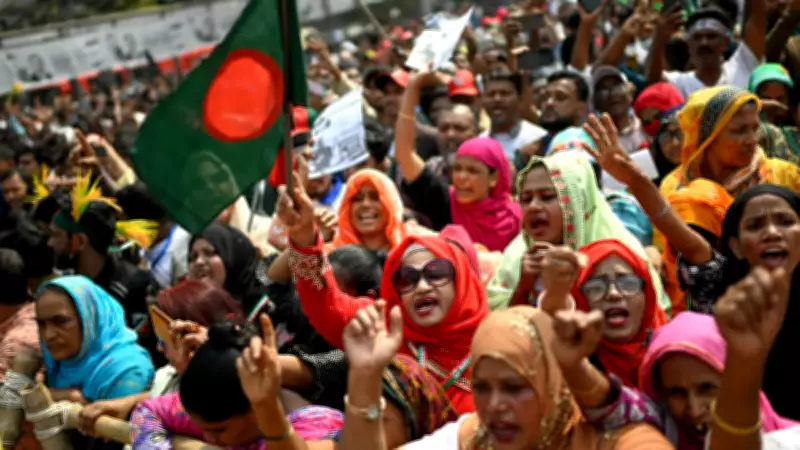
In a major political development, Bangladesh has witnessed the return of the Bangladesh Nationalist Party (BNP) to power following the first election after Sheikh Hasina's ouster in 2025. The BNP secured a commanding two-thirds majority, marking a decisive rightward shift in the country's political landscape. However, the election's fairness remains under scrutiny, as the Awami League, led by Hasina, was barred from contesting due to suspension by the interim government of Muhammad Yunus.
This exclusion facilitated gains for both BNP and Jamaat-e-Islami, though they contested separately. The political realignment raises concerns for minority communities and secular intellectuals, including filmmaker Shahriar Kabir, who has been imprisoned since September 2024 on questionable grounds. Global appeals, including at the United Nations level, urge his release, given his age and health issues.
For India-Bangladesh relations, the election outcome poses challenges. Ties had deteriorated since Hasina's removal, with interim leaders making provocative statements against India. If BNP adopts a similar stance, it could revert to the strained relations seen between 2001 and 2006. BNP leader Tarique Rahman has made balanced remarks about India, but his ability to manage pressures, including demands from Jamaat to extradite Hasina, will crucially impact bilateral cooperation on trade, transit, and security.
Japan's Takaichi Secures Landslide Victory
Japanese Prime Minister Sanae Takaichi has achieved a monumental political triumph, with her Liberal Democratic Party (LDP) winning a super-majority in recent snap polls. The LDP secured 316 seats in the lower house of the Diet, the largest majority for a single party in post-World War II Japan, bolstered further to 352 seats with coalition partner Japan Innovation Party.
This overwhelming mandate empowers Takaichi to pursue constitutional reforms, override upper house rejections, and boost defense spending. Known for her firm stance against China, she has previously suggested that a Chinese attack on Taiwan might warrant a Japanese military response. Her alignment with the Quad grouping and rapport with former U.S. President Donald Trump positions her as a strong leader capable of enhancing regional security, welcomed by allies wary of Chinese aggression.
Ukraine's Olympic Hero: Vladyslav Heraskevych's Stand
At the Winter Olympic Games in Milano-Cortina, Italy, Ukrainian skeleton racer Vladyslav Heraskevych emerged as a symbol of resilience. During practice, he wore a "remembrance helmet" adorned with photos of Ukrainian athletes killed in Russia's invasion, but the International Olympic Committee (IOC) disqualified him for violating Article 50, which bans political messaging.
Heraskevych defended his actions, stating he could not betray his fallen compatriots amid a war where Ukrainian cities face daily bombings and civilian targeting. This incident underscores the complex interplay between sports and politics, reminiscent of historical gestures like the Black Power salute in 1968. Heraskevych's principled stand highlights that some values transcend Olympic medals, earning him hero status in Ukraine.
India's Strategic Move: Seizure of Iranian Shadow-Fleet Ships
In a bold action, India has seized three tankers in its Exclusive Economic Zone linked to Iran's shadow fleet, used for illicit oil trade under U.S. sanctions. These aging, uninsured vessels often change flags and ownership to evade detection, facilitating oil exports for Russia, Iran, and Venezuela, with Russian revenue funding its war in Ukraine.
India's move coincides with increased U.S. and European pressure on such ships and ongoing indirect talks between the U.S. and Iran in Geneva. By acting against Iran-linked vessels, India aligns with U.S. interests, potentially strengthening bilateral ties amid a new trade framework announcement. This calculated step pressures Iran and its ally Russia, as Iran cannot easily claim ownership of the seized ships.
Reverend Jesse Jackson: A Legacy of Civil Rights
Iconic American civil rights activist Reverend Jesse Jackson has passed away at 84. A champion of human rights, he worked alongside Martin Luther King Jr. and advocated against poverty and right-wing regression. In a 2014 interview, he emphasized infrastructure investment and bottom-up development for India, advice that remains relevant today as global human rights face new challenges.
Jackson's legacy inspires continued efforts for equality and justice worldwide, reminding us of the enduring importance of civil rights activism in an increasingly complex international landscape.