

Goa Stampede Inquiry Committee Recommends Dissolving Temple Management
A fact-finding inquiry committee established after the tragic stampede at the Shree Devi Lairai jatra in Shirgao, Goa, has issued a significant recommendation to the government. The committee suggests exploring the possibility of dissolving the current temple management committee and appointing an administrator, following due legal process if deemed appropriate.
Tragic Incident Details
The stampede occurred on May 3, 2025, during the second day of the five-day religious festival. The devastating event resulted in six fatalities and left seventy-four individuals injured, marking one of the most serious crowd disasters in recent Goa history.
Committee Findings on Crowd Management Failures
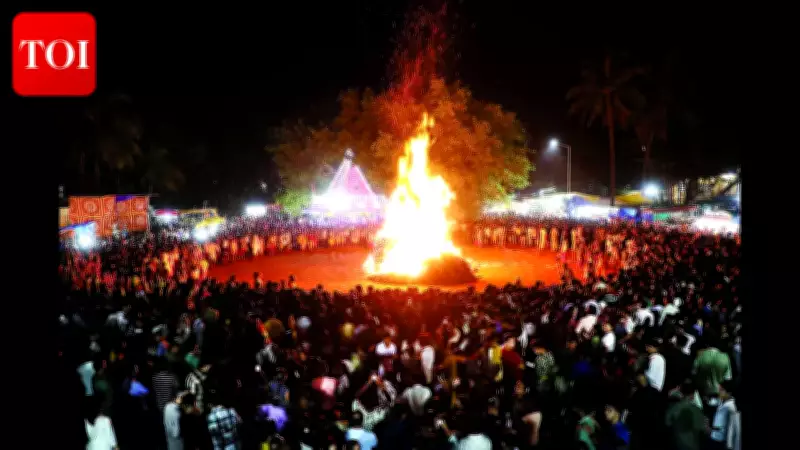
The inquiry committee's comprehensive report identified multiple critical failures in crowd management planning and execution. According to the findings, organizers failed to develop a multi-route circulation plan to prevent congestion along the primary pathway between the lake and the 'homkund' area, where devotees traditionally walk barefoot through burning coals as part of the religious ritual.

The report specifically noted: "No systematic assessment appears to have been undertaken using historical data, crowd arrival patterns, the festival's growing popularity, an increase in the number of 'dhonds' year by year, and the nature of the visitors, particularly for high-density events like the homkund ritual."
Preventable Nature of the Tragedy
The committee concluded that the stampede could likely have been prevented with proper planning, thorough risk assessment, and effective implementation of crowd management strategies. Given that the jatra is an annual event, organizers were expected to possess familiarity with prevailing crowd behavior patterns and historical attendance data.
The report emphasized: "In this context, it was imperative for the organizers either to carry out a comprehensive risk analysis and preparedness exercise and/or to cooperate with the authorities and incorporate their inputs in planning and execution."
Historical Precedents Ignored
During their investigation, committee members discovered that some injured victims reported similar minor incidents occurring in previous years. In one documented case, a devotee suffered critical arm injuries during the homkund ritual on a prior occasion.
The committee strongly recommended that key stakeholders, including festival organizers, district administration officials, and local police authorities, should thoroughly review past occurrences and implement adequate precautionary measures to prevent similar tragedies in the future.
Organizer Non-Cooperation Documented
The inquiry revealed that organizers failed to provide critical information regarding expected visitor numbers, potential risks based on historical incidents, or alternative circulation route options. More concerningly, the committee found evidence suggesting organizers disregarded specific instructions issued by revenue and police authorities concerning crowd management protocols.
The report stated: "The organizers appeared to disregard specific instructions issued by the revenue and police authorities on crowd management, instead focusing solely on the conduct of religious activities."
Broader Implications for Festival Management
This incident and the subsequent inquiry findings highlight significant challenges in managing large-scale religious gatherings in India. The committee's recommendation to potentially dissolve the temple management committee represents a substantial intervention that could reshape how similar festivals are organized and regulated across the region.
The comprehensive report serves as both a documentation of specific failures in this particular case and a broader warning about the critical importance of systematic crowd management planning for all major public gatherings, particularly those with religious significance that attract large numbers of devotees annually.






