Government Justifies NSA Detention of Climate Activist Sonam Wangchuk in Supreme Court Hearing
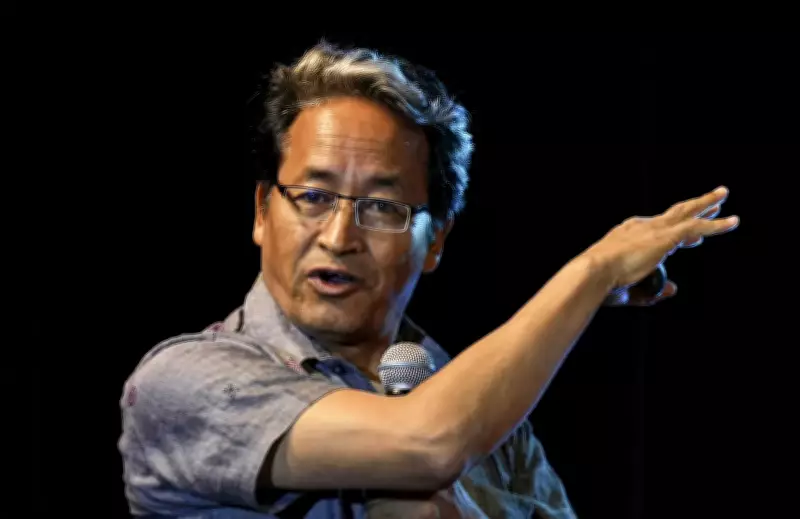
The Indian government on Monday strongly defended its decision to detain prominent climate activist Sonam Wangchuk under the stringent National Security Act (NSA), telling the Supreme Court that his actions were aimed at creating significant political and social unrest in the sensitive border region of Ladakh. Solicitor General Tushar Mehta, appearing before a bench comprising Justices Aravind Kumar and P B Varale, presented the government's position during a crucial hearing.
Allegations of Instigating Unrest and Drawing Parallels with Regional Turmoil
Mehta asserted that Wangchuk was actively attempting to emulate protest movements witnessed in neighboring countries such as Bangladesh, Sri Lanka, and Nepal. The government's legal representative emphasized that the activist's appeals were specifically targeted at mobilizing Gen Z to take to the streets against governmental authorities, potentially creating serious problems in Ladakh. This region holds particular strategic sensitivity as it shares borders with countries that maintain less-than-friendly relations with India.
The solicitor general elaborated that Wangchuk's references to historical protest movements, including the Arab Spring and recent political upheavals in South Asian nations, were clear attempts to instigate large-scale public demonstrations against the government. "You are asking Gen Z to come out. You are anticipating or hoping for a riot-like situation in Nepal. It is a clear instigation," Mehta told the bench during the proceedings.

Countering Peaceful Protest Claims and Gandhian Principles Argument
Responding to Wangchuk's submission that he was conducting a peaceful protest aligned with Gandhian principles, the solicitor general dismissed this characterization as misleading. "Gandhi was just a facade to hide his real intention of instigating violence," Mehta stated unequivocally. He argued that the comparison with Mahatma Gandhi was fundamentally fallacious and served only as a superficial cover for what he described as inflammatory and instigatory speech.
The government maintained that the detention was executed strictly in accordance with legal procedures, with no violations in the process. Mehta detailed that the detention order was properly served to Wangchuk, a procedure that took approximately four hours. During this time, the activist was shown video clips of his own speeches and activities that authorities relied upon as evidence for his detention. The entire procedure was documented through videography to ensure transparency and adherence to protocol.
Legal Procedure and Documentation of Detention Process
Reading excerpts from Wangchuk's speeches before the court, the solicitor general highlighted content that he argued demonstrated clear intent to provoke unrest. The government's position rests on the assertion that such speech represents a genuine threat to public order and national security, particularly in a strategically vital region like Ladakh.
This legal confrontation brings to the forefront ongoing tensions between activist movements and governmental authority in sensitive border regions, raising important questions about the balance between free expression and national security concerns in contemporary India.