Gujarat High Court Dismisses Family's Compensation Claim Over Driver's Death
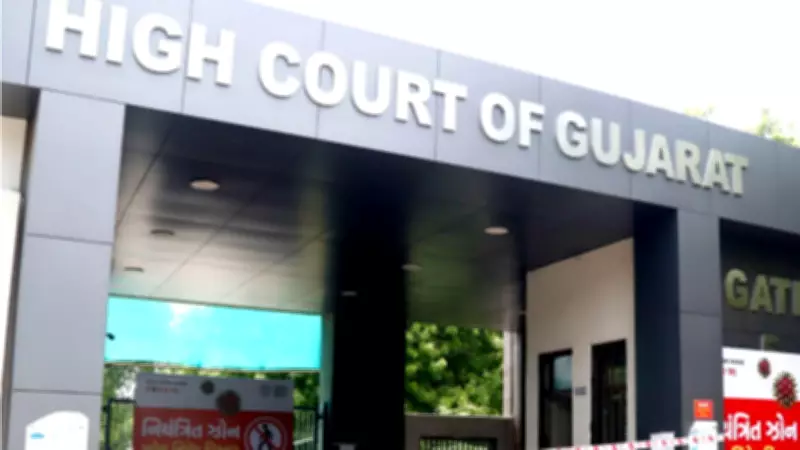
The Gujarat High Court has dismissed a petition filed by the family of a deceased car driver, Vikramsinh Chavda, who was killed in a 2018 road accident while returning from Kedarnath. The court ruled that the claim for compensation was unsustainable due to a failure to establish an employer-employee relationship between Chavda and the vehicle owner.
Background of the Case
The petitioners, comprising Chavda's wife and parents, had challenged a judgment from the Commissioner for Workmen's Compensation in Banaskantha, which had dismissed their claim of Rs 14.66 lakh, along with interest and penalty under the Workmen's Compensation Act. They argued that Chavda was on duty as a driver for the respondent on October 24, 2018, when the accident occurred.
According to the family, the accident happened as a cow suddenly appeared on the road, causing the Tata Tiago car to overturn. Chavda was returning from Kedarnath with Vipul, the brother of the car owner, who also died in the crash, and two other friends, Yasin and Bhavesh, who survived.

Court's Rationale for Dismissal
In an oral order passed on February 3, Justice M K Thakker emphasized that no documentary evidence was produced to prove the employer-employee relationship. The court noted that the FIR lodged after the accident suggested Chavda was driving due to friendly relations with Vipul, rather than as part of employment duties.
Key points from the court's decision include:
- The Commissioner was justified in concluding the accident did not occur during the course of employment.
- During cross-examination, Chavda's father admitted he did not know the address of the car owner's office or the nature of his business.
- No evidence was presented to show Chavda received a salary from the car owner.
Arguments from Both Sides
The petitioners' advocates contended that the Commissioner had erroneously considered evidence, ignoring their denial that Chavda was driving merely due to friendship. They also argued that the car owner had never disputed the existence of an employer-employee relationship.
In contrast, the respondents' advocates maintained that no evidence whatsoever was provided to establish Chavda was an employee at the time of the incident, reinforcing the FIR's implication of a personal trip.
Implications of the Ruling
This ruling underscores the critical importance of documentary proof in compensation claims under the Workmen's Compensation Act. Without clear evidence of employment, such as salary records or formal agreements, courts may dismiss claims even in tragic circumstances like fatal accidents.
The decision highlights the legal challenges families face in seeking redress when employment status is ambiguous, particularly in informal work arrangements common in many sectors.