High Court Confirms Capital Punishment for 38 Terror Operatives
The Gujarat High Court on Tuesday upheld a special court verdict in the 2008 Ahmedabad serial blasts case, confirming death sentences for 38 operatives of the Indian Mujahideen (IM) and life imprisonment for 11 others. The court also directed the state government to compensate the families of victims, including 56 people who lost their lives in the attacks.
A Division Bench of Justices AY Kogje and Samir Dave rejected all appeals against the special court’s February 2022 order, which had marked the first time any court in India handed down the death sentence to so many convicts in a single case. The bench confirmed the sentences awarded to members of the banned terror outfit, including former leader of the Student Islamic Movement of India (SIMI), Safdar Nagori, and his associates from 11 states.
Compensation Ordered for Victims' Families
The High Court directed the Gujarat Government to pay compensation of Rs 10 lakh to the families of those killed in the serial blasts and Rs 5 lakh to grievously injured individuals. According to Special Public Prosecutor Amit Patel, the compensation must be disbursed before March 30, 2027. Patel stated that the prosecution presented all evidence, including material related to the larger conspiracy, before the court.

Patel told reporters, "The trial court's order has been confirmed. The death penalty awarded to 38 convicts has been upheld." He added that the case had been heard extensively for more than one-and-a-half years, with day-to-day hearings since March 2025 and full-day sessions from January 2026 before the verdict was delivered.
Details of the 2008 Ahmedabad Serial Blasts
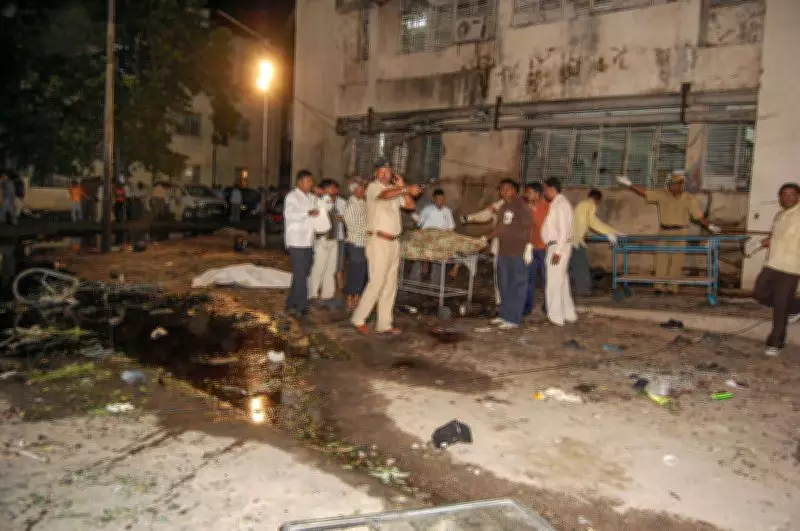
On July 26, 2008, a series of 21 bomb blasts ripped through different parts of Ahmedabad within 70 minutes, killing 56 people and injuring more than 200. Explosions also struck hospitals where victims from other blast sites were rushed for treatment, marking the first known instance of hospitals being targeted in such an attack. Additionally, bombs planted in Surat failed to explode, leading to 15 FIRs in that city.
Seventy-eight persons were put on trial before the special court, which merged 35 police cases—20 FIRs from Ahmedabad for the 21 blasts and 15 from Surat. In February 2022, 49 of the accused were convicted: 38 received the death penalty and 11 were given life imprisonment. All convicts challenged the verdict before the High Court, while the Gujarat Government sought confirmation of the death sentences.
Historical Context of Mass Death Sentences
This is the first time such a large number of convicts have been handed the death sentence by any court in a single case since January 1998, when a TADA court in Tamil Nadu sentenced all 26 convicts to death in the assassination of former Prime Minister Rajiv Gandhi in 1991. The convicts in the Ahmedabad case include Nagori and his associates from states including Gujarat, Madhya Pradesh, Kerala, and Uttar Pradesh.
A lawyer representing the convicts said they would challenge the High Court's order after studying the detailed judgment. The court's decision has been widely reported as a significant step in delivering justice for the victims of one of India's deadliest terror attacks.