

Gujaratis Stranded in Gulf Nations as Iran-US-Israel Conflict Escalates
Gujaratis residing in the United Arab Emirates, Kuwait, and Qatar have found themselves stranded and increasingly anxious as tensions rise in the ongoing Iran-US-Israel conflict. Many describe a palpable sense of unease, particularly in Dubai, where residents are adapting to a de facto curfew despite no official restrictions being imposed.
Residents Report Aerial Interceptions and Precautionary Measures
Shailesh Amin, a Vadodara-based advocate currently in Dubai with his family, likened the situation to a self-declared curfew. "Malls and shops remain open, but only essential outings are happening," he noted. Amin relocated from a hotel to his niece's apartment in Silicon Oasis, highlighting that anxiety levels are high, with approximately 90% of residents working remotely. Schools have transitioned to online classes until Wednesday, and numerous companies have adopted remote operations to ensure safety.
Supermarkets experienced a significant rush on Sunday as residents engaged in precautionary buying. Siddharth Saiyan, a Vadodara resident living in Dubai for 18 months, observed, "There was heavy crowding at Lulu and other superstores, with some families preparing emergency bags." Saiyan also witnessed aerial interceptions during a birthday party on a yacht in the Marina area, where three drones were intercepted mid-air, causing debris to fall. Only half of the 100 invitees attended due to the tense atmosphere.

Flight Disruptions and Stranded Travelers
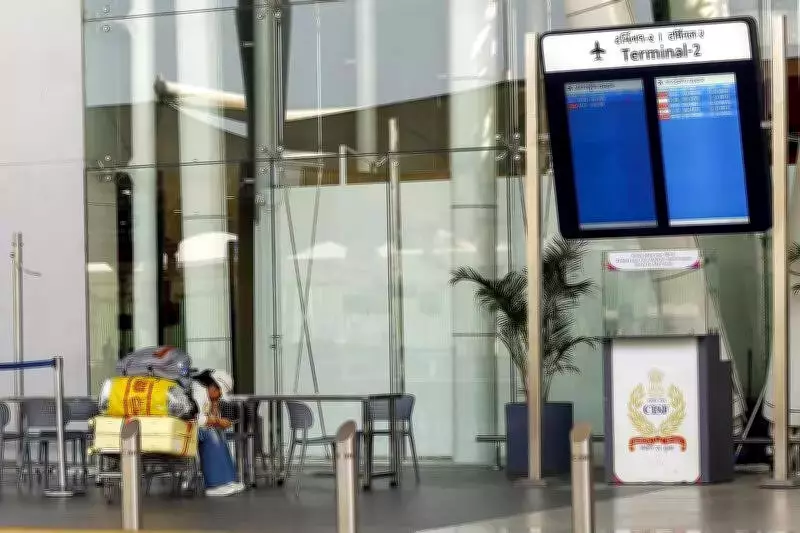
Flight cancellations and airspace restrictions have compounded the anxiety. Gita Patel, wife of a former Anand councillor, and Jayraj Shelat, grandson of a former MLA, were among passengers on an Ahmedabad-to-Kuwait flight that returned shortly after take-off, with accommodations provided. In another instance, Vadodara district panchayat member Kamlesh Patel is stranded at a hotel in Istanbul while en route from Atlanta via Abu Dhabi.
Seven members of the Trivedi family from Vallabh Vidyanagar were also stranded at Athens airport due to multiple cancellations. A helpline established for Vadodara residents in affected regions received 113 calls, documenting 278 travellers, according to Vadodara MP Hemang Joshi.
Uncertainty in Outbound Travel and Government Response
Outbound travel remains highly uncertain. Devnandan Somani, a Gujarat-based businessman on a short holiday in Dubai, stated, "Local outlets are open with no panic, but with airports shut, I'm exploring options like a road trip to Muscat for a flight to Delhi." Deepak Desai, a Surat-based professional in Dubai for leisure, added, "We're adopting a wait-and-watch approach, holding return plans for up to 10 days."
Travel agents report that departures are being assessed case-by-case, with return segments facing greater uncertainty due to airspace restrictions. Manish Sharma of the Travel Agents' Federation of India Gujarat chapter praised the UAE government's intervention, noting, "Providing free accommodation to stranded tourists eases pressure and ensures safety." Akbar Rana of Sanjar Travels in Ahmedabad estimated that 2,800–3,000 people from Ahmedabad, Surat, Baroda, and Rajkot are currently in the region, many as Umrah pilgrims with stays ending around March 20.
Daily Life and Safety Precautions in Dubai
Haritha Chandran, an Amdavadi environmental consultant in Dubai, shared, "We heard loud noises from missile interceptions on Sunday and stayed indoors for safety. Remote work and learning are in place." A chartered accountant in Dubai reported hearing a loud thud around 9 am Monday local time but noted that essential services continue, with the Indian embassy issuing advisories and the UAE government covering hotel costs for stranded passengers. "We're avoiding balconies due to debris risks from intercepted missiles," he added.
Residents have reported hearing blasts over the past two days, with minor damage such as shattered window panes in some areas. Public spaces are noticeably less crowded, though no formal curbs have been announced, and essential services remain uninterrupted.






