

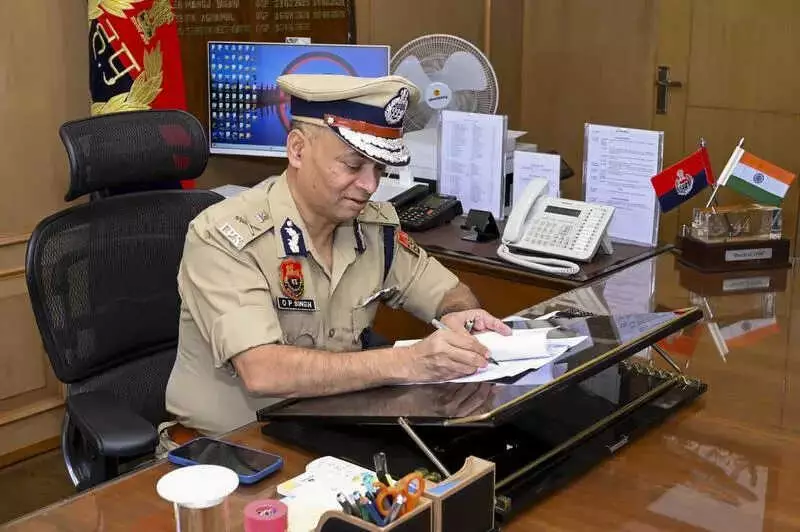
In a major strategic move, Haryana's top police officer has laid out an aggressive roadmap to combat crime in the state, emphasizing a zero-tolerance approach and modern monitoring techniques. The Director General of Police (DGP), O P Singh, chaired a high-level review meeting at the Haryana Police Academy in Madhuban to finalize priorities and an action plan for the year 2026.
Multi-Pronged Strategy Against Hardened Criminals
Addressing all senior IPS officers, including ADGPs, IGs, Police Commissioners, and DIGs, DGP Singh listed key priorities. A central focus is a multi-pronged approach to monitor hardcore criminals, history-sheeters, and individuals out on bail. This will be combined with intensified intelligence gathering aimed specifically at dismantling drug trafficking and human trafficking cartels.
"Zero tolerance of crime and criminals is our topmost priority at all times," Singh stated unequivocally. He highlighted recent successes, including the deportation of 11 criminals and gangsters from abroad, asserting that there is "zero delay" in acting against such elements. The police are vigilantly tracking the activities of gangsters both inside jails and those who have secured bail.

Tech Monitoring, Bail Cancellation, and Social Media Vigilance
Elaborating on the technical measures, Singh revealed, "We developed our own input system to monitor those who are out on bail." Officers have been given strict instructions to seek the cancellation of bail from courts immediately upon noticing any illegal or criminal activity by these individuals.
The DGP also sent a strong warning to the advocates (parokars) of criminals, stating that the police will be strict with anyone offering direct or indirect support or harboring such offenders. Furthermore, social media platforms are under strict monitoring, as they are often used to lure innocent young minds into criminal activities.
Breaking the Economic Backbone of Drug Networks
Reiterating the government's firm stance against narcotics, DGP Singh issued specific directives. He ordered that detailed history sheets of offenders involved in NDPS (Narcotic Drugs and Psychotropic Substances) cases be prepared. Their illegally acquired properties must be identified and frozen through due legal process to dismantle the economic foundation of drug networks.
Additionally, he instructed officials to periodically review rehabilitation and de-addiction centers to assess successful recovery outcomes, indicating a focus on both enforcement and rehabilitation.
The meeting also reviewed terror-related incidents from recent years. Officers noted with satisfaction that recent cases were successfully traced without any loss of life. Singh stressed the need for stronger coordination with central and other investigating agencies to ensure swift and result-oriented responses to future threats.
Emphasizing the strength of the force, Singh dismissed extortionists as mere "beggars," pointing out that Haryana has a 70,000-strong police force equipped with modern weapons and state-of-the-art infrastructure. "They will be weeded out of society. Our main focus is to maintain and sustain the faith of people in the police," he concluded, underscoring the ultimate goal of visible, deterrent policing across the state.






