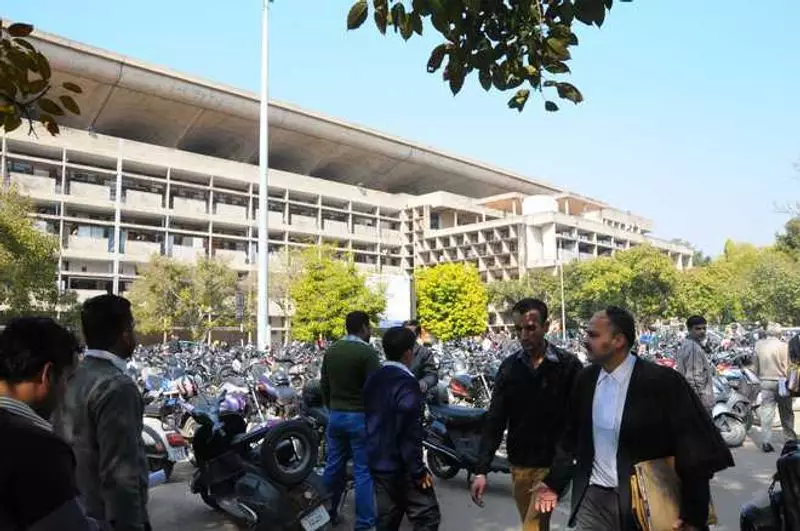
In a stunning verdict that has sent shockwaves through Haryana's legal circles, the Punjab and Haryana High Court has delivered a massive blow to the state government's recruitment process for Assistant District Attorneys (ADAs). The court has not only quashed the entire selection test but has also branded the examination process as "arbitrary and unconstitutional."
The Core Controversy: Legal Questions Deliberately Excluded
The bench, comprising Justice Sandeep Moudgil, uncovered a shocking revelation during the hearing. The recruitment examination for 410 ADA posts, conducted earlier this year, had completely excluded questions from core legal subjects. This deliberate omission raised serious questions about the government's intent and the examination's validity for selecting qualified legal professionals.
"The entire selection process is arbitrary, irrational, unreasonable, and unconstitutional," the court declared in its strongly-worded judgment, highlighting the fundamental flaws in how the state approached hiring legal officers.

Petitioners' Victory: Legal Merit Prevails
The case was brought forward by several petitioners, including Anshul Garg and other aggrieved candidates, who challenged the examination pattern through Civil Writ Petition 8763 of 2024. Their central argument proved decisive: how could a recruitment test for legal positions justify excluding legal knowledge assessment?
The court agreed wholeheartedly, noting that the exclusion of legal questions defeated the very purpose of recruiting competent legal professionals for the ADA positions.
Government's Flawed Justification
During proceedings, the Haryana government attempted to defend its controversial decision by arguing that since the recruitment rules didn't explicitly mandate legal questions, their exclusion was permissible. However, this argument collapsed under judicial scrutiny.
The court firmly rejected this justification, emphasizing that common sense and the specific nature of the position demanded legal expertise assessment. The bench questioned how the state could possibly select qualified legal officers without testing their legal knowledge.
Broader Implications for Government Recruitment
This judgment extends beyond the immediate ADA recruitment case. It sets a crucial precedent for all government recruitment processes, particularly for specialized positions. The court's ruling reinforces that recruitment tests must be rationally connected to the job requirements and cannot arbitrarily exclude essential qualification assessments.
The verdict serves as a stern warning to recruitment authorities across states to ensure their examination patterns genuinely test candidates' suitability for the specific roles they're applying for.
What Comes Next for ADA Recruitment?
With the entire selection process now nullified, the Haryana government must go back to the drawing board. The state will need to:
- Design a new recruitment examination that properly assesses legal knowledge
- Ensure the examination pattern aligns with the requirements of the ADA position
- Restart the recruitment process while maintaining transparency and fairness
This landmark judgment not only provides justice to the petitioners but also strengthens the integrity of public service recruitment systems across India.