

High Court Overturns Dera Chief's Conviction in 2002 Journalist Murder Case
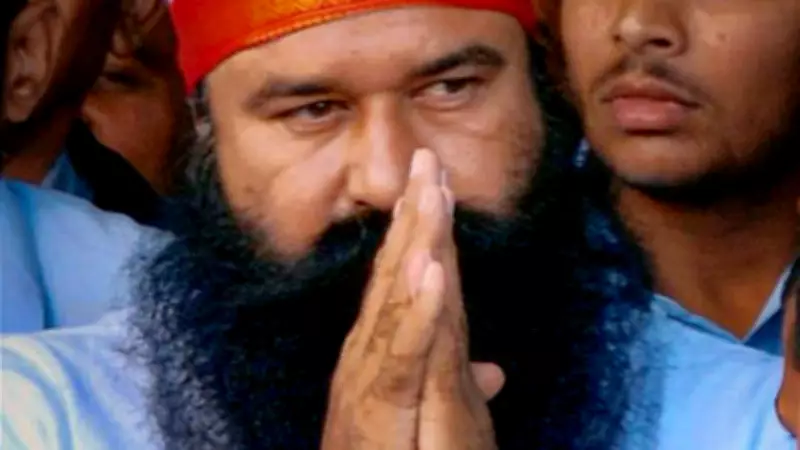
In a significant judicial development, the Punjab and Haryana High Court has acquitted Dera Sacha Sauda sect leader Gurmeet Ram Rahim Singh in the high-profile 2002 murder case of journalist Ram Chander Chhatrapati. The ruling overturns a previous life imprisonment sentence handed down by a special Central Bureau of Investigation (CBI) court nearly seven years ago.
Court's Decision and Immediate Aftermath
A division bench led by Chief Justice Sheel Nagu allowed Ram Rahim's appeal against his conviction, effectively clearing him of murder charges in the killing of the Sirsa-based journalist. However, the court simultaneously upheld the convictions of three other accused individuals involved in the case. The detailed written judgment explaining the court's reasoning is currently awaited.
The verdict has sparked strong reactions from the slain journalist's family, who have announced their intention to challenge the decision before the Supreme Court of India. Despite this acquittal, Ram Rahim will remain incarcerated as he continues to serve a separate 20-year sentence for the 2017 conviction of raping two female disciples.

Background of the Case
The case originated in October 2002 when Ram Chander Chhatrapati, editor of the evening newspaper Poora Sach in Sirsa, was shot outside his residence. The journalist had been publishing extensive reports regarding allegations of sexual exploitation of women followers at the Dera Sacha Sauda headquarters.
According to prosecution details based on the CBI investigation, Chhatrapati had published multiple stories referencing an anonymous letter that detailed alleged exploitation of female devotees within the Dera. His newspaper also covered legal proceedings seeking a CBI probe into these allegations.
The journalist had previously reported receiving threats connected to his reporting. On October 24, 2002, assailants shot him outside his Sirsa home. After initial treatment in Haryana hospitals, he was transferred to Delhi, where he succumbed to his injuries on November 21, 2002.
Legal Proceedings and Arguments
Following the incident, a case was registered and eventually transferred to the CBI. In July 2007, the agency filed a charge sheet naming Ram Rahim and three others as accused in the murder conspiracy. After a trial spanning nearly a decade, a special CBI court in Panchkula convicted all accused in January 2019, sentencing them to life imprisonment.
During the appeal hearing, Ram Rahim's defense counsel argued that the sect leader had been falsely implicated, contending that prosecution evidence failed to establish his involvement in any conspiracy. The defense highlighted that initial charge sheets did not name the Dera chief as a conspirator and questioned the credibility of later-introduced eyewitness accounts about the alleged conspiracy.
The defense further submitted that the conviction relied heavily on the assumption that Ram Rahim had motive due to the journalist's reporting, but argued that investigators produced no evidence demonstrating the Dera chief had actually read the newspaper or harbored personal animosity toward Chhatrapati.
Prosecution's Position and Court's Analysis
The CBI and counsel representing the journalist's family opposed the appeal, defending the trial court's findings. They maintained that the investigation had uncovered a conspiracy leading to the attack on Chhatrapati, who had been publishing critical reports about the Dera and its leadership.
The prosecution relied on evidence gathered during investigation and testimony presented during trial to support the original conviction. After hearing both parties, the division bench examined defense arguments and prosecution materials before ultimately allowing Ram Rahim's appeal while upholding convictions for the three other accused.
Legal Significance and Key Takeaways
The high court's ruling represents a major development in the long-running criminal proceedings related to the journalist's killing. By overturning the special CBI court's conviction, the judgment alters the outcome of a case that previously found the Dera chief guilty of conspiracy to murder.
Key aspects of the judgment include:

- The Punjab and Haryana High Court acquitted Dera Sacha Sauda chief Gurmeet Ram Rahim Singh in the 2002 journalist murder case
- The court allowed his appeal against the 2019 conviction by a special CBI court
- Convictions of three other accused—Krishan Lal, Kuldeep Singh, and Nirmal Singh—were upheld
- The detailed judgment explaining the court's reasoning is yet to be released
- The family of slain journalist Ram Chander Chhatrapati plans to challenge the verdict in the Supreme Court
Broader Implications
This ruling marks another significant turn in the legal battles surrounding the Dera Sacha Sauda chief. Ram Rahim had previously been acquitted by the high court in another murder case related to the 2024 killing of former Dera manager Ranjit Singh.
For the journalist's family, the verdict represents a substantial setback after more than two decades of legal proceedings. However, their announced intention to pursue the matter before the Supreme Court indicates the legal battle is far from concluded. The case continues to highlight the complex interplay between media freedom, religious institutions, and India's judicial system.





