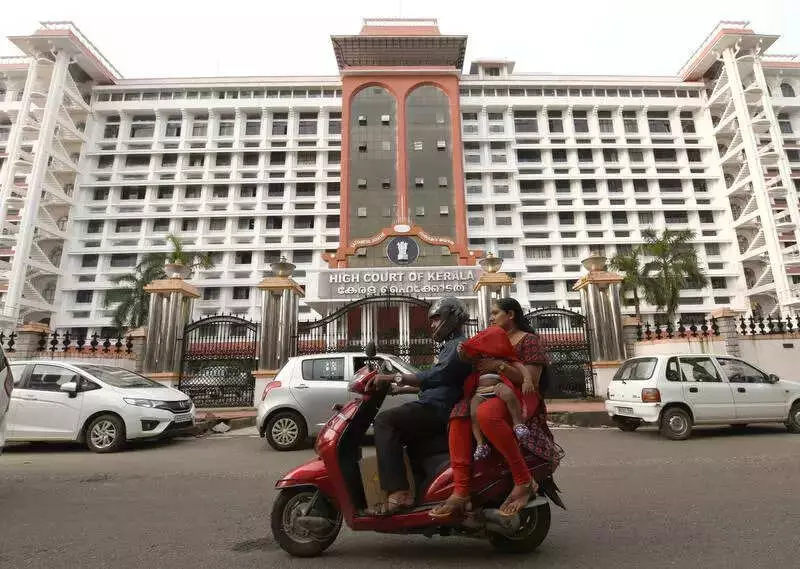
In a significant ruling aimed at preserving the sanctity of places of worship, the Kerala High Court has issued a clear directive to the Cochin Devaswom Board. The court has mandated that security personnel wearing inappropriate attire, specifically T-shirts bearing the word 'bouncer', must not be deployed during temple festivals or within temple premises.
Petition Challenges Board's Security Decision
The order was passed by a bench comprising Justices V Raja Vijayaraghavan and K V Jayakumar. The bench was disposing of a petition filed by N Prakash of Maradu, Ernakulam. The petitioner had challenged the board's controversial decision to engage individuals described as 'bouncers' to manage devotees at the renowned Sree Poornathrayeesa Temple in Tripunithura during this year's Vrischikolsavam festival.
Prakash alleged in his petition that the devaswom officer had deployed strong-arm security personnel who were wearing T-shirts prominently emblazoned with the word "bouncer." He argued that allowing such individuals to control crowds within the sacred precincts of a temple was completely inappropriate. The petitioner stressed that this practice was fundamentally incompatible with the sanctity, decorum, and cultural ethos expected in a traditional temple environment.

Court Hearing and Board's Assurance
During the court proceedings, the counsel representing the Cochin Devaswom Board responded to the allegations. The counsel submitted that it was indeed unfortunate that individuals wearing such informal and aggressive T-shirts were deployed during the holy festival. The board's lawyer assured the High Court that this incident would not be repeated in the future.
The counsel gave a firm assurance that the board would take necessary steps to ensure proper decorum is maintained in all arrangements related to temple security and festivals. Accepting this submission and assurance from the board's side, the High Court proceeded to dispose of the petition filed by N Prakash.
Upholding Cultural Ethos in Temple Management
This ruling highlights the judiciary's role in safeguarding the cultural and spiritual atmosphere of religious institutions. The court's intervention underscores the expectation that administrative bodies like devaswom boards must align their operational decisions, including security arrangements, with the solemnity of the space they manage.
The directive serves as a reminder that while crowd management is essential, especially during large festivals, the methods and appearances of personnel involved must respect the site's religious significance. The order is likely to set a precedent for how temple trusts and similar bodies across the state approach the sensitive task of maintaining order without compromising on reverence and tradition.