

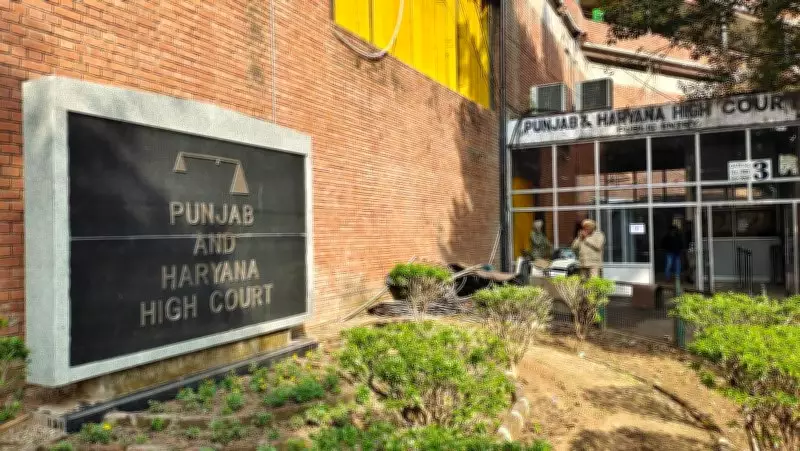
The Punjab and Haryana High Court has delivered a significant ruling, asserting that government departments and public authorities cannot rely on inter-departmental correspondence and administrative file processing as justifications for prolonged delays in filing appeals. This decision effectively challenges one of the most common explanations offered by government offices for missed deadlines: that the file was moving between departments for opinions, approvals, and procedural clearances.
Court rejects 546-day delay plea
Refusing to condone a delay of 546 days by the state of Punjab in filing an appeal against a judgment that granted a revised pay scale to Psychiatrist Social Workers, the court made it clear that government agencies cannot seek special treatment under limitation law merely because decisions pass through administrative channels. The Bench, comprising Justice Jasgurpreet Singh Puri and Justice Amarjot Bhatti, observed that the delay occurred solely due to procedural communication between different departments of the state for seeking opinions and approval of the draft Letters Patent Appeal (LPA).
Inter-departmental communication not sufficient cause
The Bench noted that the delay was caused merely due to inter-departmental communication and procedural formalities. It also considered the state's argument that financial implications would arise if the appeal was not entertained, but found no merit in this contention. Referring to the underlying dispute, the court highlighted that the Single Judge had allowed the employee's writ petition on the ground that the grade pay was Rs 3,800 when the advertisement was issued, but was later revised to Rs 4,200.

The Bench asserted: "Once the pay scale of the post on which the petitioners were recruited underwent a change, the respondents were under an obligation to grant the revised pay scale, which existed in the Rules governing the service on the date when the petitioners were appointed. It has also come in the judgment passed by the Single Judge that other employees working in the department on the same post were getting grade pay of Rs 4,200. Therefore, the aforesaid argument raised by the learned Assistant Advocate General appearing on behalf of the applicant would not be sustainable."
Supreme Court precedent cited
The Bench further observed that the law on delayed appeals by government authorities is no longer res integra and referred to the recent Supreme Court judgment in Shivamma (Dead) through LRs versus Karnataka Housing Board and others, where it was held that administrative lethargy and laxity can never constitute sufficient ground for condonation of delay. The judges remarked: "It is settled law that mere inter-departmental communication cannot be termed to be sufficient cause within the ambit of Section 5 of the Limitation Act, especially when the appellant is the State authority or its instrumentality, because no special treatment can be given to them and rather larger responsibility is imposed."
Inordinate delay cannot be condoned
The court added that it would have considered the matter in a different manner had it been a minor delay due to the mentioned reasons. However, the inordinate delay of 546 days occurred due to the grounds taken in the application, which cannot be said to constitute sufficient cause for condonation of delay. The Bench concluded: "Consequently, we are of the considered view that the aforesaid large delay cannot be condoned because of the reasons."
This ruling serves as a reminder to all government departments and public authorities that bureaucratic procedures cannot override limitation laws, and that administrative lethargy will not be tolerated by the courts.






