

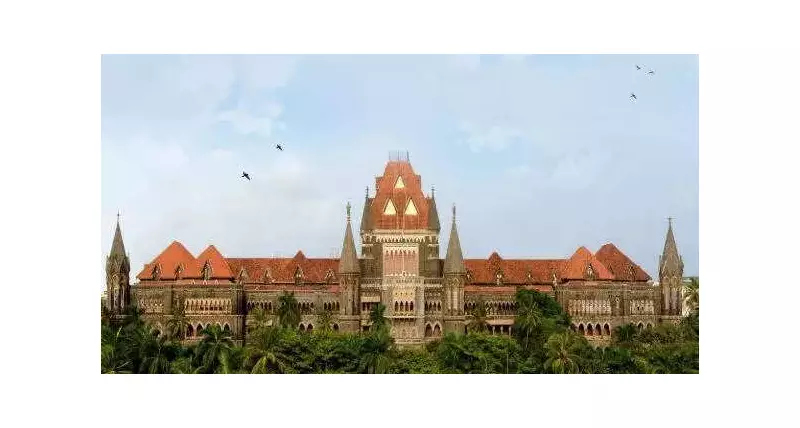
In a significant ruling, the Bombay High Court on Monday came down heavily on the Maharashtra state government for initiating a "misconceived" and prolonged legal battle against Tata Communications Ltd (Tata Com) over a land claim. The court set aside a former revenue minister's order demanding over ₹26 crore from the company and imposed a cost of ₹25 lakh on the state for its "indifferent approach."
A Decade of 'Avoidable' Litigation
The dispute has its origins in a plot of land measuring nearly 4,000 square metres in Bandra, Mumbai. This land was specifically allotted to Videsh Sanchar Nigam Ltd (VSNL) in 1992 for the construction of staff quarters. Construction of two buildings was completed, and the Brihanmumbai Municipal Corporation (BMC) issued an occupancy certificate in 1998.
Following the liberalisation and disinvestment policy, VSNL was renamed Tata Communications in January 2008. The controversy began in 2012 when the suburban collector in Mumbai, without conducting a hearing, alleged that the land had been transferred to Tata Com without permission. The collector's order claimed ₹26 crore from the company as "unearned income," recoverable as land revenue arrears within seven days.

This order was upheld by the then Maharashtra Revenue Minister in June 2014. Tata Communications challenged the minister's order in the Bombay High Court in 2015, leading to a legal battle that stretched for nearly a decade.
Court's Scathing Observations and Legal Reasoning
Justice Kamal Khata, presiding as a single judge bench, delivered a strongly-worded judgment. The court held that the state's claim was "inequitable and unwarranted." Justice Khata pointed out that the collector and the revenue minister had completely overlooked a crucial Supreme Court judgment.
"The Collector, Assistant Commissioner, and the Revenue Minister are expected to know the law and to abide by the binding decisions of the Supreme Court and High Court," the judge remarked. The bench emphasized that the "mere dilution of shareholding in VSNL cannot be characterised as a transfer of the land to Tata Com." It reiterated the settled legal principle that the transfer of shares does not constitute a transfer of the company's property, as shareholders have no direct proprietary interest in its assets.
Justice Khata expressed deep concern over the state's conduct as a litigant. "The State is today the single largest litigant, and the public exchequer bears the costs or burden of every needless contest," the judgment stated. It reminded the government of its duty to function as a "model litigant" – one that meets just claims honestly and does not defeat lawful entitlements through technical pleas or obstinate resistance.
Costs Imposed to 'Jolt Authorities Out of Apathy'
Highlighting the "indifferent approach" of the concerned authorities, the court stated that the decade-long litigation was entirely "avoidable." To serve as a deterrent and to jolt the authorities out of their apathy, the bench found it necessary to impose costs.
The High Court directed the Maharashtra government to pay ₹25 lakh to Tata Communications within four weeks. This cost is intended to compensate the company for the unnecessary legal ordeal and to signal that the state must act more responsibly.
"The State, unlike a private litigant, must discourage litigation, resolve disputes at the threshold…" the court added, underscoring the government's unique responsibility in the justice system. The ruling serves as a stark reminder to government departments to seek proper legal advice and act in accordance with established law before pursuing protracted litigation.






