Karnataka High Court Imposes Heavy Costs on Wipro in Employee Payment Dispute
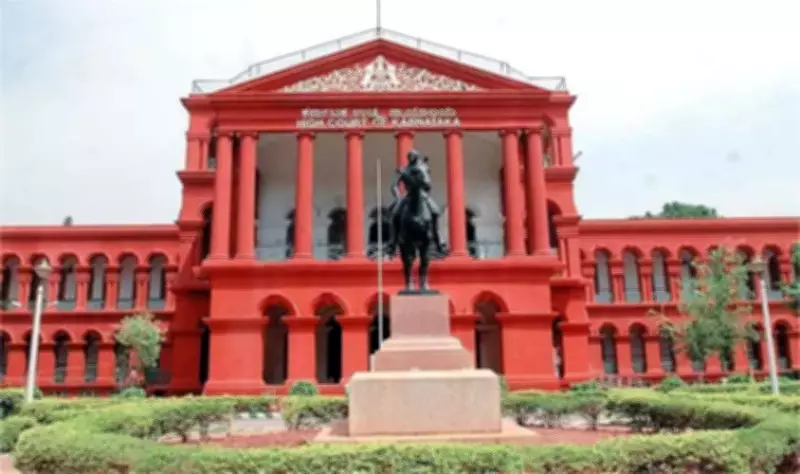
The Karnataka High Court has delivered a significant ruling against Wipro Enterprises Private Limited, imposing costs of Rs 50,000 on the company for what it termed an abuse of the process of law in an ex gratia payment dispute. The costs are payable to a former employee who was the plaintiff in the civil court case.
Background of the Employment Dispute
The case centered around Ratnesh Pandey, a resident of Haryana who had worked for Wipro for nearly 12 years in various positions before resigning in September 2017. Pandey submitted his resignation on August 6, 2017, which was formally accepted by the company on September 18, 2017.
In recognition of his long service and contributions, Wipro offered Pandey an ex gratia lump sum payment of Rs 6,32,000. This payment was scheduled to be made 18 months after his employment cessation, subject to specific conditions outlined in the cessation letter.

Conditions and Subsequent Non-Payment
The key condition attached to the ex gratia payment required that Pandey not join competing companies—specifically Philips India Limited or Bajaj Electricals Ltd—from the date his employment ended. Despite this condition, when the 18-month period elapsed and the payment was not forthcoming despite repeated correspondence, Pandey approached the civil court seeking the promised amount along with 18% interest.
Wipro contested the claim, arguing that Pandey had not formally accepted the terms and conditions of the cessation letter and therefore was not entitled to the ex gratia payment. The company maintained that without explicit acceptance, the offer stood revoked under Section 6(2) of the Indian Contract Act of 1872.
Legal Proceedings and Court Rulings
On July 23, 2024, the 20th Additional City Civil Judge in Bengaluru ruled in favor of Pandey, ordering Wipro to make the payment. Unsatisfied with this decision, Wipro appealed to the Karnataka High Court, reiterating their position about the lack of formal acceptance from the former employee.
In response, Pandey countered that Wipro had never alleged any breach of contract conditions during the initial civil court proceedings. He maintained that the company's belated arguments about acceptance were merely technical objections raised to avoid payment.
High Court's Scathing Observations
Justice Sachin Shankar Magadum, presiding over the case, made several critical observations in his ruling:
- The court noted that August 19, 2017, was Pandey's last working day with the company
- It rejected Wipro's contention that signing and returning the cessation letter was a mandatory condition for entitlement to payment
- The judge held that the phrase "return to us for records" in the letter could not be interpreted as a condition precedent to payment
- The High Court found that Wipro had already acted upon the cessation letter and, having failed to prove any actual breach by Pandey, could not deny payment on what it termed "hyper-technical grounds"
The court's ruling emphasized that Wipro's conduct amounted to an abuse of legal process, particularly given that the company had never previously alleged any breach of contract conditions during the lower court proceedings.
Broader Implications for Corporate-Employee Relations
This case highlights several important aspects of employment law and corporate responsibility:
- The limitations companies face in using technical contractual interpretations to avoid promised payments to former employees
- The judiciary's willingness to penalize what it perceives as abuse of legal processes by corporate entities
- The importance of clear communication and documentation in employment separation agreements
- The protection of employee rights even after employment termination
The Rs 50,000 costs imposed by the High Court serve as both compensation to the former employee for the legal harassment and as a deterrent against similar conduct by corporations in future employment disputes.