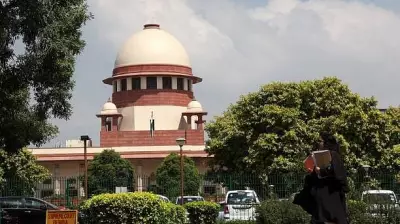
Punjab and Haryana High Court Rejects Compromise in Factory Death Case
The Punjab and Haryana High Court has delivered a landmark ruling, holding that allowing a compromise to terminate criminal proceedings in a Haryana factory accident case would treat a 'lost life' as a private commodity. This decision underscores the court's stance that such an approach would negate the deterrent effect of law and the public safety element inherent in tragedies involving death by negligence.
Dismissal of Petition Seeking Quashing of FIR
The High Court passed these orders while dismissing a petition filed by Pradeep Kumar Tomar and another accused. The petitioners sought the quashing of a 2021 FIR registered at Ferozepur Jhirka police station under Section 304 A (causing death by negligence) of the Indian Penal Code. Additionally, the petition aimed to annul the October 24, 2021, chargesheet and all consequential proceedings based on a compromise deed executed on May 9, 2023.
In its detailed order, Justice Sumeet Goel observed that the essential foundation for quashing criminal proceedings on the basis of a compromise relies on the absence of any subsisting grievance by the victim against the accused. However, in cases of homicidal negligence, the deceased remains the primary aggrieved party. Any settlement entered into by relatives is, at best, a secondary resolution that cannot supersede the interest of the state, acting as parens patriae, in prosecuting an act that extinguished a human life.
Legal Reasoning and Observations
Justice Goel further noted that while Section 2(x) of the BNSS, 2023, employs a statutory fiction to include 'guardians' and 'legal heirs' within the definition of a 'victim', this inclusion is intended for the purpose of compensation and procedural standing. It does not afford them the moral or legal authority to condone a death on behalf of the departed.
'The power to quash an FIR or criminal proceeding is an equitable remedy that must not be used to bypass the gravity of an irreversible harm,' Justice Goel stated. 'Crimes involving death transcend the boundaries of a private injury and instead fall into the category of crimes against society at large.'
Background of the Case
The case stems from a tragic accident on October 6, 2021, when two workmen, Om and Rampal, fell from a beam of a shuttering structure after a portion of it collapsed. Om succumbed to his injuries at a local hospital, while Rampal, who was initially treated and later taken home, also died. The FIR was registered on the complaint of Om's brother-in-law.
The counsel for the petitioners argued that the accused were contractual employees and lacked any supervisory or managerial role in the execution of the shuttering work. They contended that there was no specific allegation in the FIR or the final report indicating any act or omission constituting criminal negligence on their part. The petitioners maintained that the incident was accidental and highlighted that they extended financial assistance of Rs 3 lakh each to the families of the deceased, besides covering medical expenses.
Heavily relying on the compromise entered with the complainant, who stated that the FIR was lodged under a misunderstanding and that he no longer wished to pursue the case, the petitioners sought relief. However, after hearing all parties, the High Court dismissed the plea, observing that the FIR cannot be quashed merely because of a compromise.
Key Takeaway from the Ruling
The court emphasized a foundational legal truth: 'The silence of the grave cannot be substituted by the signatures of the heirs on a compromise or settlement deed.' This principle underscores that in cases involving death, the interests of justice and public safety must prevail over private settlements, ensuring that the law serves as a deterrent and upholds societal values.