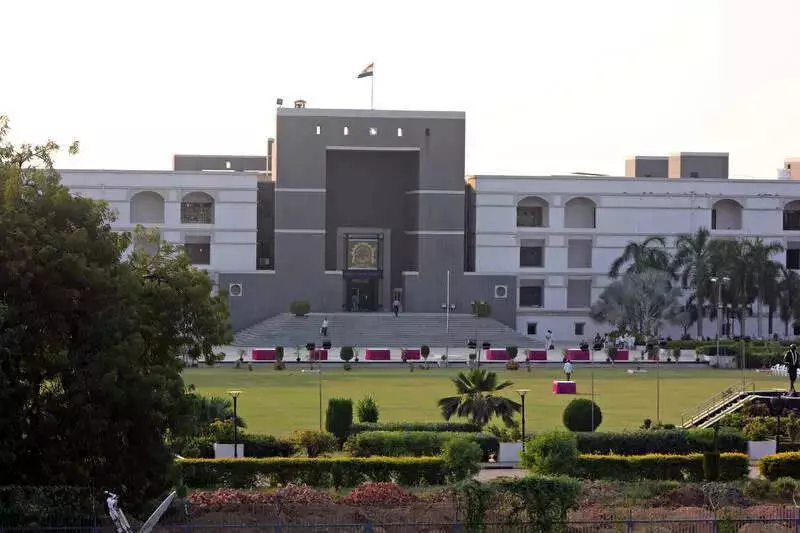
The Gujarat High Court has stepped into a distressing financial and legal battle, issuing notices to three major banks for refusing to release fixed deposit savings to a widow. The funds are held jointly with her late husband, whose alleged will bequeathed all assets to another woman.
Court Questions Banks Over Withheld Funds
The High Court has formally sought explanations from the State Bank of India, Punjab National Bank, and the Ahmedabad Mercantile Cooperative Bank. Justice Aniruddha Mayee directed the banks to clarify why they did not follow Reserve Bank of India (RBI) guidelines in this case. The notices are returnable on December 15, 2025.
The core of the dispute lies in the banks' refusal to allow the widow to access the jointly held fixed deposits. They cited a civil suit filed by another woman in the Ahmedabad rural court on July 14. This suit claims entitlement to the deposits based on a will allegedly executed by the deceased husband.

A Heartbreaking Tale of Betrayal and Legal Tangles
The petitioner widow and her husband were both employees of the Gujarat Industrial Development Corporation (GIDC). The childless couple had invested their retirement benefits into various fixed deposits. According to the widow's advocate, Zubin Bharda, the husband was diagnosed with cancer. During his treatment, he reportedly developed a relationship with a woman at the same medical institution and is said to have executed a will leaving all his assets to her.
The widow has asserted a clear and primary right to the funds. She contends that the fixed deposits were created specifically from her retirement corpus, which was deposited by her husband. She is both the nominee and the joint holder of these accounts.
Legal Arguments and the Path Forward
Advocate Bharda presented several key arguments in the High Court. He questioned the authenticity of the will presented by the other woman, who has not even applied for its probate. He argued that she has "wrongly" staked a claim to assets that rightfully belong to the widow.
Most crucially, Bharda emphasized that in the absence of any restraining order from a competent court, the banks are obligated under RBI norms to release the funds to the surviving joint account holder and nominee. Lawyers for two banks attempted to defend their position by pointing to the pending civil suit, but the court has demanded a clearer justification for bypassing standard banking regulations.
The case highlights the vulnerability of surviving family members in joint financial holdings when contested wills emerge. It also puts the spotlight on the responsibility of financial institutions to adhere to regulatory guidelines unless presented with a definitive court order. The widow's fight to access her own retirement savings continues, with the next hearing scheduled for late 2025.