
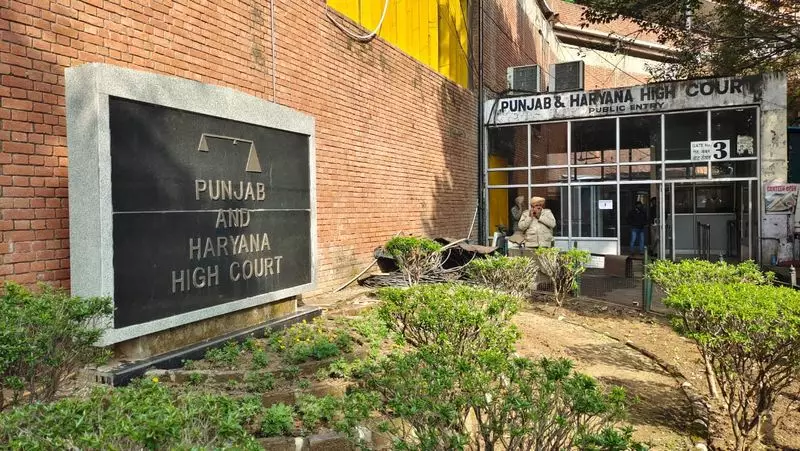
In a landmark ruling that underscores the human cost of bureaucratic delays, the Punjab and Haryana High Court has directed the state to pay 7.5 percent annual interest on the delayed release of pensionary benefits to the family of a Deputy Inspector General (DIG) of Police who died 34 years ago. The order brings a long-awaited measure of justice to the widow and children of DIG Pritam Singh, who passed away while in service in 1990.
A Three-Decade Wait for Justice
The bench of Justice Vinod S. Bhardwaj delivered the significant verdict while hearing a petition filed by the late officer's son, Iqbal Singh. The court was informed that Pritam Singh, who served in the Punjab Police, died on May 31, 1990. Despite his decades of service, his family faced an excruciatingly slow process to receive his terminal benefits.
The crucial family pension was finally sanctioned and released to his widow, Gurbachan Kaur, only in August 1998, more than eight years after the officer's demise. The even more substantial gratuity amount, a critical financial support for the bereaved family, saw an even longer delay. It was sanctioned in February 2006 and ultimately paid in March 2007 – nearly 17 years after Pritam Singh's death.
Court's Stern Directive on Interest
The central issue before the court was the compensation for this inordinate delay. The petitioner's counsel argued that the family suffered significant financial hardship due to the state's failure to disburse the funds in a timely manner, as mandated by law.
Justice Bhardwaj, in his order, firmly held that the delay was unjustified. The court directed the state to calculate and pay interest on the delayed amounts at the rate of 7.5 percent per annum. The interest on the family pension will be calculated from the date it became due (after the officer's death) until its actual release in August 1998. Similarly, interest on the gratuity will be computed from the due date until its final payment in March 2007.
The court gave the state authorities a clear deadline of four months to complete the interest calculation and make the payment to the DIG's family. This directive places accountability squarely on the administrative machinery for its lapses.
Broader Implications and a Message
This ruling extends beyond a single case. It sets a vital precedent for how government departments must treat the pensionary benefits of deceased employees, especially those who served in high-stress roles like the police force. The judgment highlights a systemic failure where families, already grappling with loss, are forced into prolonged legal battles for their rightful dues.
The court's decision to award interest serves a dual purpose: it provides monetary compensation for the loss of use of funds over the years, and it acts as a deterrent against future bureaucratic indifference. The specified 7.5% rate is intended to reflect a fair compensation for the erosion of the money's value over the extended period.
For the family of DIG Pritam Singh, the verdict closes a painful chapter that spanned generations. For the administration, it is a stark reminder that the welfare of its employees and their families cannot be sidelined by procedural inertia. The case underscores the critical need for efficient, compassionate, and timely settlement of pension claims, ensuring that those who served the nation are honored not just in memory, but in the dignified support provided to their loved ones.