

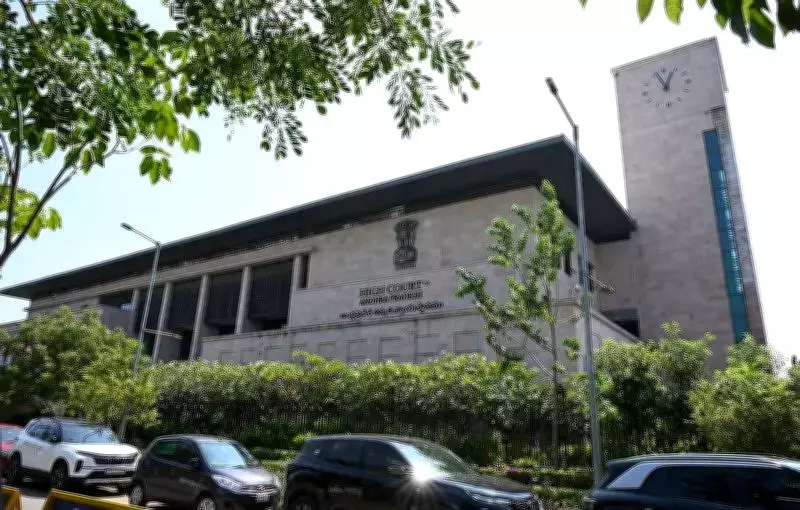
Andhra Pradesh High Court Directs Government to File Response on Tribal School Buildings
The Andhra Pradesh High Court has issued a significant directive to the state government, ordering it to file a comprehensive response in a Public Interest Litigation (PIL) concerning the provision of school buildings in tribal areas. The PIL specifically highlights the alarming situation in the Alluri Sitharama Raju (ASR) district, where numerous schools are operating without proper infrastructure.
PIL Highlights Critical Infrastructure Deficiencies
The petition was filed by Akhil Guru Teja, who brought to the court's attention that a staggering 915 schools in ASR district are currently functioning without adequate buildings. According to the petitioner, students in these tribal areas are forced to study under trees, exposed to the elements and lacking basic educational facilities.
Advocate Thandava Yogesh, representing the petitioner, argued forcefully before the court that providing proper school buildings is not merely a recommendation but a mandatory requirement under the Right to Education (RTE) Act. He presented compelling evidence that while sanctions had been approved for the construction of 644 schools, none of these projects have been completed to date. Furthermore, construction work has not even commenced at 285 additional schools that were earmarked for development.

Court Expresses Grave Concern Over Educational Conditions
The bench, headed by Chief Justice Dhiraj Singh Thakur and Justice Challa Gunaranjan, expressed deep concern about the educational conditions faced by tribal students. The justices observed that students should not be exposed to the vagaries of nature while pursuing their education, emphasizing that proper infrastructure is fundamental to quality learning.
While the petition specifically addressed the situation in ASR district, the High Court bench expanded the scope of its inquiry, expressing apprehension about what the educational infrastructure situation might be across the entire state of Andhra Pradesh. This broader concern reflects the court's commitment to ensuring educational equity throughout the region.
Government Directed to Provide Comprehensive Report
In response to these serious allegations, the High Court has issued formal notices to the state government, directing it to file a detailed report on the subject matter. The court has specifically asked the government to explain:
- The current status of school building construction in ASR district
- Steps being taken to complete pending construction projects
- Plans for initiating construction at schools where work has not begun
- The broader situation of school infrastructure across Andhra Pradesh
- Compliance measures with the Right to Education Act requirements
The court's directive represents a significant intervention in educational infrastructure development, particularly for marginalized tribal communities. By expanding the inquiry beyond ASR district to encompass the entire state, the High Court has positioned itself to address systemic issues in educational infrastructure provision.
This case highlights the ongoing challenges in implementing the Right to Education Act's infrastructure provisions, especially in remote and tribal areas where educational disparities are often most pronounced. The government's response, which the court has now mandated, will be closely watched by educational advocates and tribal communities throughout Andhra Pradesh.






