

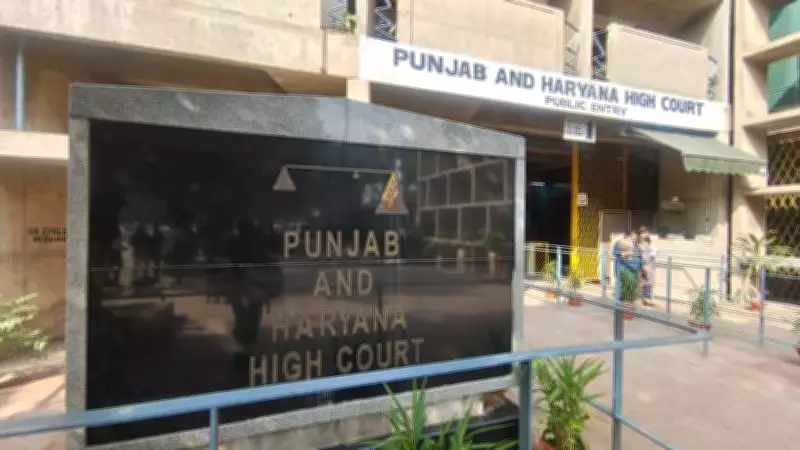
The Punjab and Haryana High Court has ordered the release of Jobanpreet Singh, a resident of Majitha, who was arrested without being furnished written grounds of arrest. Justice Alok Jain, presiding over a habeas corpus petition, ruled that the arrest violated constitutional safeguards and binding directions from the Supreme Court.
Background of the Case
The petition was filed by Jobanpreet's father, Mukhwant Singh, who alleged that his son was illegally detained by the police. According to the plea, Jobanpreet had served as the election agent for a Shiromani Akali Dal (SAD) candidate during the recently held municipal elections in Majitha. Mukhwant Singh claimed that the Aam Aadmi Party (AAP), which lost the election, used police machinery to settle political scores.
Allegations of Political Rivalry
In his petition, Mukhwant Singh stated: "The filing of the false FIR and the illegal arrest of the detainee are a direct and malicious consequence of the political rivalry arising from the election results, and constitute a gross abuse of the police machinery for political purposes." He sought directions to produce Jobanpreet and declare his arrest illegal, void, and unconstitutional.

Details of the Arrest
Jobanpreet was arrested in the early hours of May 31, 2026, in connection with an FIR registered on May 30 at the Majitha police station. His counsel argued that the police failed to provide written grounds of arrest, violating Article 22(1) of the Constitution of India and Supreme Court directives. Additionally, when produced before the Duty Magistrate in Amritsar, the state conceded that no notice under Section 35 of the Bharatiya Nyaya Sanhita (BNS) was given, and no grounds of arrest were furnished.
Court's Decision
Justice Alok Jain, while disposing of the petition, made it clear that Jobanpreet must be released in light of settled legal propositions. The court also directed the preservation and production of all video recordings, CCTV footage, and electronic evidence related to the arrest, concealment, and detention of the detainee.
Legal Implications
The case highlights the importance of adhering to constitutional safeguards during arrests. Article 22(1) mandates that no person shall be detained without being informed of the grounds of arrest, nor shall they be denied the right to consult and be defended by a legal practitioner. The Supreme Court has consistently emphasized that written grounds must be furnished at the time of arrest to prevent arbitrary detention.
This ruling serves as a reminder to law enforcement agencies to follow due process, especially in cases where political motivations are alleged. The High Court's intervention underscores the judiciary's role in protecting individual liberties against potential abuse of power.






