

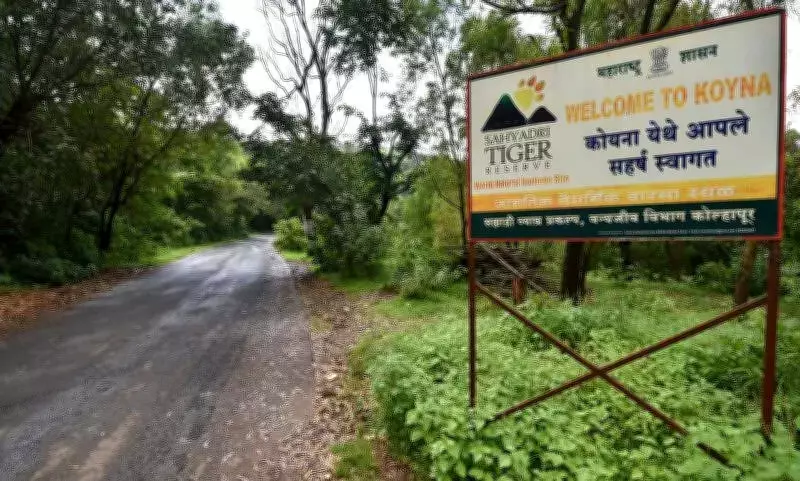
Bombay High Court Mandates Safety Measures for Schools in Sahyadri Tiger Reserve
In a significant move to address escalating human-wildlife conflicts, the Bombay High Court's Kolhapur bench has issued urgent directives to safeguard students in the Sahyadri Tiger Reserve (STR). On Thursday, the bench, comprising Justice Madhav J Jamdar and Justice Pravin S Patil, ordered the district collector and forest department to identify schools at risk of wild attacks within seven days and implement a comprehensive safety plan.
Immediate Actions Ordered by the Court
The court has mandated the deployment of a safe school transport system, operational from 6 am to 6 pm daily, for students residing in the STR area. This transport will be escorted by a dedicated rapid response team to ensure protection during commutes. Additionally, the bench directed that an advanced life support ambulance be permanently stationed at the Shittur-Warun primary health centre in Kolhapur district to handle medical emergencies arising from wildlife incidents.
Background of the Public Interest Litigation
The orders came during the hearing of a Public Interest Litigation (PIL) filed by activist Harish B Kamble, who highlighted a "systemic failure" in managing the human-wildlife interface in the STR, which includes Chandoli National Park. The petitioner detailed alarming statistics: the reserve, spanning 1,166 square kilometers across Koyna Wildlife Sanctuary, Chandoli National Park, and Radhanagari Wildlife Sanctuary, is home to five tigers, 50 leopards, and over 100 Indian Gaurs.

Since 2014, there have been 30 recorded wild attacks, resulting in five human fatalities, including two school children. In 2025 alone, five attacks have occurred, underscoring the urgency of the situation. Kamble emphasized that over 1,000 acres of fertile agricultural land lie fallow due to fear, and more than 500 school students face daily life-threatening risks. He sought measures such as solar fencing and enhanced medical services.
Court's Rationale and Petitioner's Concerns
The bench expressed satisfaction with the prima facie case presented by the petitioner, stating, "Considering the factual position and to protect the citizens and school-going children, the immediate interference of this court is necessary in the matter." Kamble pointed out that the STR and Chandoli park span Kolhapur, Sangli, Satara, and Ratnagiri districts, with four educational institutions located near the core zone, primarily in Sangli and Kolhapur.
These schools enroll over 500 students who live inside the core zone, an area prone to wildlife attacks. Many students must walk four to five kilometers to reach proper roads before boarding buses, increasing their vulnerability. In support of the need for safe transportation, Kamble cited a letter from the headmaster of Hutatma Nanak Singh Secondary and Higher Secondary School in Sonawade, Sangli district, detailing the difficulties faced by students due to human-wildlife conflict.
Forest Department's Response and Ongoing Efforts
Dhairyasheel Patil, deputy conservator of forests for the Kolhapur division, outlined existing measures to mitigate wild attacks. "We have built waterholes in forest areas to prevent wild animals from venturing into human habitations," he said. "Additionally, in coordination with the electricity department, we have ensured daytime power supply, reducing the need for farmers to irrigate fields at night, when they are more prone to attacks."
Patil confirmed that the forest department will convene a coordination meeting with heads of health, state transport, and education departments to address the court's requirements, including safe transport for students and advanced life support ambulances. He also highlighted the department's 1926 toll-free helpline, which deploys response teams for emergencies.
Broader Implications and Future Steps
This court intervention marks a critical step towards enhancing safety in wildlife-prone regions. The directives aim not only to protect students but also to address broader issues of human-wildlife coexistence. As authorities work to implement these measures, the focus remains on preventing further tragedies and ensuring sustainable solutions for communities living near the Sahyadri Tiger Reserve.






