

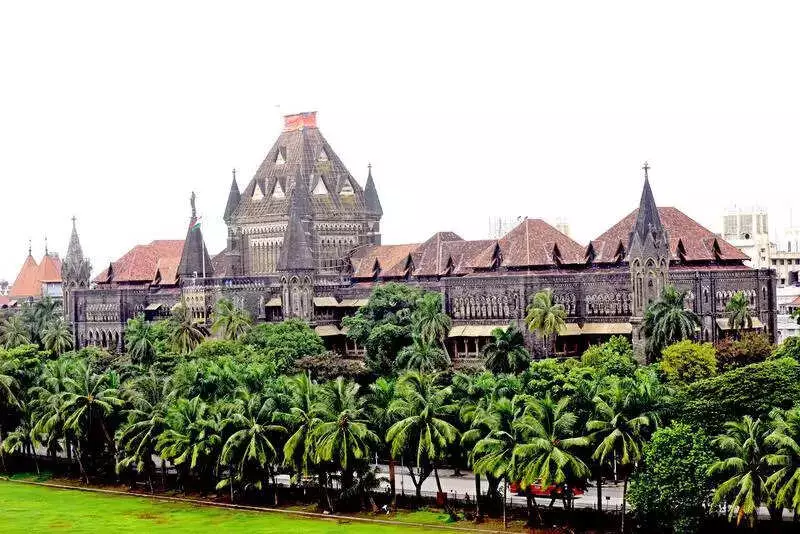
The Bombay High Court on Tuesday delivered a stern rebuke to the Maharashtra Pollution Control Board (MPCB) and the Brihanmumbai Municipal Corporation (BMC) for their failure to implement concrete measures safeguarding construction site workers from severe air pollution and health hazards.
Court Demands Immediate Action for Worker Safety
A bench comprising Chief Justice Shree Chandrashekhar and Justice Gautam Ankhad emphasized that the right to health is a fundamental right for these workers. Expressing frustration over the lack of compliance with earlier directives, the court ordered the MPCB to return on Wednesday with an immediate solution to ensure minimum required safety standards. "You don't take care of workers…at least give them masks," the bench remarked during the hearing of a suo motu Public Interest Litigation (PIL) concerning Mumbai's worsening Air Quality Index (AQI).
The judges clarified that they did not wish to halt work or development but insisted on strict adherence to norms. "The lack of compliance is an outcome of simple negligence," Chief Justice Chandrashekhar stated orally. The HC directed the BMC to "apply its mind" and also return with practical suggestions to ensure proper compliance with its own air pollution prevention guidelines.

Authorities Summoned, Earlier Efforts Called a 'Breach'
BMC chief Bhushan Gagrani and MPCB member-secretary Devender Singh were personally present in court following summons to explain their officers' inaction. The court observed that earlier directions and undertakings given by both bodies were "more in breach than in compliance." Senior counsels S U Kamdar (for BMC) and Ashutosh Kumbhakoni (for MPCB) were told to come back with their officers and suggestions by Wednesday. "We want a solution by tomorrow. Otherwise, we can't get out of this," the bench warned.
The court expressed strong displeasure with the "so-called" monitoring of pollution at construction sites. Chief Justice Chandrashekhar pointedly asked the BMC commissioner if he had ever conducted surprise site inspections. "Once things go out of hand, then nothing will remain in your control…we have seen it in 45 years of experience," he cautioned. He further cited personal observations of widespread non-compliance, barring one building with a proper 35-foot-high metal barricade.
Data Gaps and 'Cosmetic' Monitoring Under Scrutiny
When questioned about enforcement, BMC's counsel stated that over 400 show-cause notices and 148 stop-work notices had been issued to developers for violating 2023 and 2024 guidelines. However, the court probed deeper, asking for a review of compliance status since October, data on sites lacking proper barricades, and the functionality of AQI sensors.
It was revealed that while 895 sensors were supposedly working, only 600 were relaying data. The bench questioned the steps taken to fix the non-functional monitors. Amicus curiae Darius Khambata and Janak Dwarkadas, representing NGO Vanshakti, provided suggestions. Dwarkadas criticized the "cosmetic, not effective monitoring" and advocated for a centralized data collection system from all sensors to provide the public with crucial AQI readings.
The hearing, which also referenced a December 2023 order for inspections at seven major project sites, will continue on Wednesday as the court awaits the authorities' concrete action plans.






