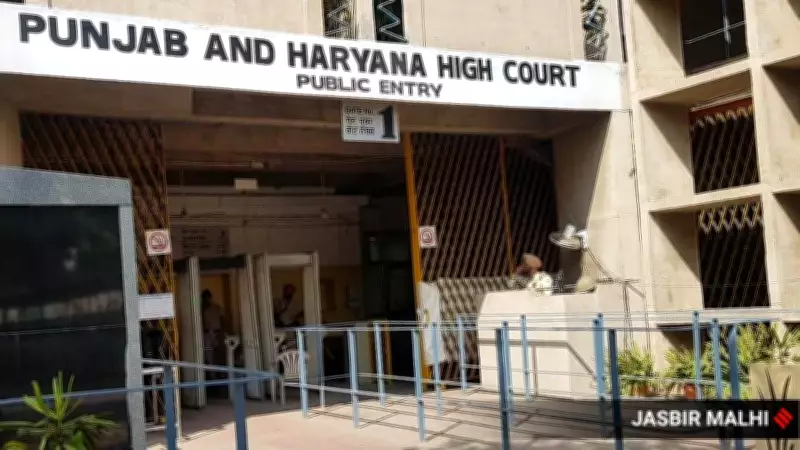
Punjab and Haryana High Court Rejects Pay Refixation Plea Citing 'Too Long a Delay'
The Punjab and Haryana High Court has firmly dismissed a petition filed by a retired Punjab Mandi Board employee seeking refixation of his pay and consequential retirement benefits. The court ruled that the plea was barred by inordinate delay and laches, emphasizing that writ courts will not assist those who "slept over wrongs" and raised claims decades later.
Background of the Case
Ajit Singh, who was appointed as a chowkidar on June 1, 1979, and retired as a Mandi supervisor on May 31, 2017, approached the court with a grievance regarding his pay fixation. He argued that under the Revised Pay Rules of 1998, his basic pay had been incorrectly fixed at Rs 6,000 instead of Rs 6,200. According to Singh, this error occurred because he was not granted an annual increment due on January 1, 1996.
In his petition, Singh sought the quashing of the Punjab Mandi Board's reply dated November 7, 2025, and a direction for the refixation of his pay, including arrears and retirement benefits. However, the court noted a significant timeline issue that ultimately led to the dismissal of his plea.

Court's Observations on Delay
Justice Harpreet Singh Brar, presiding over the case, pointed out that the alleged pay fixation error occurred in 1996. Despite this, Singh made his first formal representation to the authorities only on August 26, 2024, followed by a legal notice in August 2025. The court highlighted that during the hearing, the petitioner's counsel conceded that the grievance arose in 1996 but could not provide any satisfactory explanation for the prolonged delay in approaching the court.
The respondents' counsel, representing the Punjab Mandi Board, submitted that Singh failed to exercise his option under the Revised Pay Rules, 1998, at the relevant time. They argued that unlike another employee, Budh Ram, Singh remained silent throughout his service and for seven years after retirement, making his claim a stale one barred by delay and laches.
Legal Principles Invoked
In its ruling, the court relied on several Supreme Court precedents to underscore the importance of timely legal action. Quoting from Chairman, UP Power Corporation Limited versus Ram Gopal, the court observed:
"Whilst it is true that limitation does not strictly apply to proceedings under Articles 32 or 226 of the Constitution of India, nevertheless, such rights cannot be enforced after an unreasonable lapse of time."
The judgment further stated:
"Consideration of unexplained delays and inordinate laches would always be relevant in writ actions, and writ courts naturally ought to be reluctant in exercising their discretionary jurisdiction to protect those who have slept over wrongs and allowed illegalities to fester. Fence-sitters cannot be allowed to barge into Courts and cry for their rights at their convenience, and vigilant citizens ought not to be treated alike with mere opportunists."
The court also referenced other cases, including Mrinmoy Maity versus Chhanda Koley and others and State of Uttaranchal versus Shiv Charan Singh Bhandari, to reiterate that repeated representations do not revive stale claims. The delay must be assessed with reference to the original cause of action.
Pay Fixation as a Continuing Wrong
On the specific issue of pay fixation, the court referred to M R Gupta versus Union of India and Saroj Kumari versus State of Punjab. These rulings hold that wrong pay fixation constitutes a continuing wrong while an employee is in service, but this ceases after retirement. A petition filed with substantial delay post-retirement is liable to be dismissed on grounds of delay and laches.
Citing Prem Nath versus State of Punjab, the court quoted:

"So long as an employee 'is in service' a fresh cause of action arises every month when he is getting his monthly salary on the basis of a wrong calculation made contrary to rules… In the present case, however, the petitioners choose not to agitate their claim while in service. It is much subsequent to their superannuation that they have woken up and seek to gain impetus from certain decisions that may have been rendered in the case of similarly situated employees."
Court's Final Decision
Applying these legal principles, the court held that since Ajit Singh was no longer in service and had offered no plausible explanation for the delay, he could not claim the benefit of a continuing wrong. The court declined to exercise its writ jurisdiction and dismissed the petition, reinforcing the principle that "delay defeats equity."
This ruling serves as a significant reminder of the judiciary's stance on timely legal recourse. It underscores that while courts are avenues for justice, they cannot be approached at one's convenience after years of inaction, especially when no compelling circumstances justify the delay.