High Court Upholds Accident Victim Compensation, Dismisses NHAI's Technical Objections
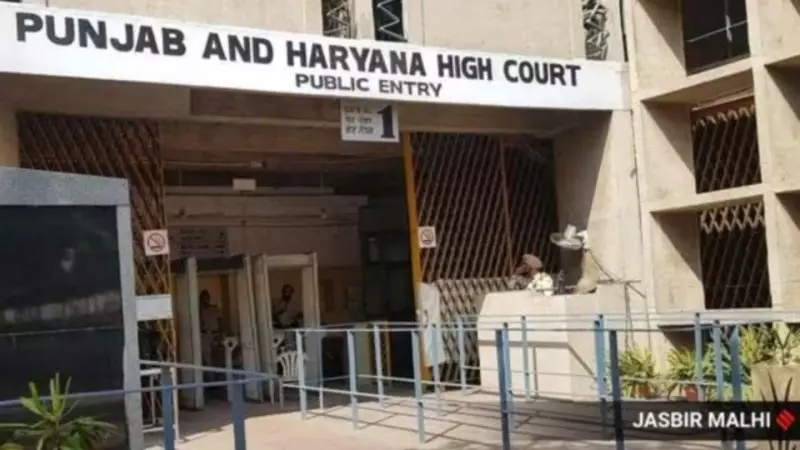
The Punjab and Haryana High Court has delivered a significant judgment, dismissing attempts by the National Highways Authority of India (NHAI) to block compensation payments to victims of a fatal accident. In a ruling that emphasizes substance over technicalities, the court declared that objections regarding office addresses and territorial jurisdiction cannot be used to avoid paying legally mandated compensation.
Justice Mandeep Pannu, while hearing the case on Monday, November 10, 2025, rejected two revision petitions filed by NHAI that sought to stop the execution of a motor accident award granted in 2023. The court firmly stated that technical objections raised during the execution stage cannot defeat a binding decree that has already been established.
The Background of the Legal Battle
The legal dispute originated from a tragic accident that occurred in Kinnaur district of Himachal Pradesh. The Motor Accident Claims Tribunal (MACT) in Chandigarh had determined that NHAI was liable for the fatal incident and accordingly issued an award on October 31, 2023.

When the decree holders, Ganga Devi and Rajesh Negi, initiated execution proceedings to receive their compensation, they named NHAI's Regional Office in Panchkula as the judgment debtor. This prompted NHAI to raise objections, arguing that their Chandigarh and Panchkula offices functioned as separate Project Implementation Units (PIUs). The authority contended that executing the award against the Panchkula office was legally incorrect.
NHAI also challenged the territorial jurisdiction of the Chandigarh tribunal, citing Section 166(2) of the Motor Vehicles Act, 1988. The authority pointed out that the accident happened in Kinnaur, the claimants resided there, and the vehicle involved belonged to the Himachal Road Transport Corporation based in Shimla.
Court's Firm Rejection of Technical Defenses
Justice Pannu, in a common order disposing of petitions CR-7862-2025 and CR-7877-2025, upheld the district judge's October 4 order that had previously rejected NHAI's objections. The High Court made several crucial observations in its ruling:
The court emphasized that both regional offices operate under the same statutory body governed by the National Highways Authority of India Act, 1988. Justice Pannu clearly stated that variations in office addresses do not change the legal identity of the judgment debtor, declaring that "The liability under the award remains that of NHAI as a statutory body."
Regarding jurisdictional challenges, the court reinforced the established legal principle that an executing court cannot reexamine the merits of a decree or question its correctness. The only exception would be if the decree represented a nullity due to complete lack of inherent jurisdiction. Finding no such fundamental defect in this case, the court ruled that challenges related to accident location or proper impleadment of parties concern the correctness of adjudication rather than inherent jurisdiction.
The court described the findings of the executing court as "fully justified and in consonance with law," adding that once an award achieves finality, the judgment debtor cannot escape payment through technical arguments about office labels or territorial objections.
However, the court did provide some relief to NHAI by clarifying that its observations would not affect the authority's pending application under Order IX Rule 13 of the Code of Civil Procedure. This application, which seeks to set aside the original award based on claims of improper service and mistaken identity representation by a Himachal PWD official, remains to be decided independently by the tribunal.
This judgment serves as an important reminder that technical objections cannot override substantive justice, especially when compensation for accident victims hangs in the balance.