High Court Demands Answers on Border Land Mining Controversy
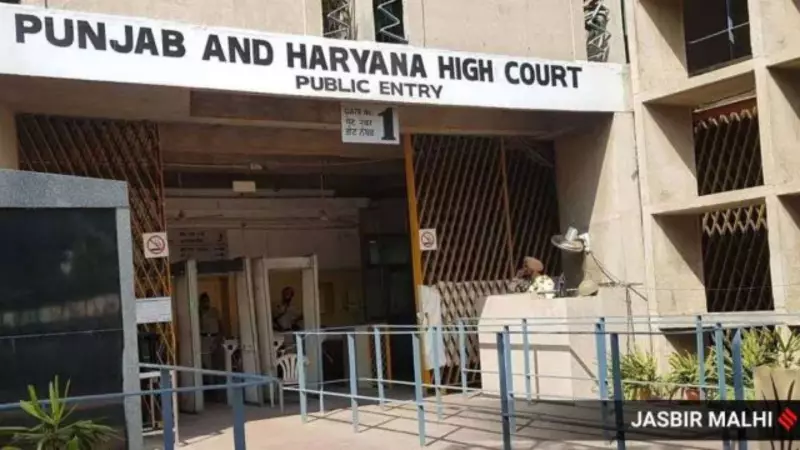
The Punjab and Haryana High Court has taken a firm stance on alleged illegal activities near the sensitive India-Pakistan border. On Monday, the court directed the Deputy Commissioner of Pathankot to provide a detailed response regarding steps taken to stop unauthorized mining and encroachment on Central Government land.
Serious Allegations Surface in Court
A division bench comprising Justice Ashwani Kumar Mishra and Justice Rohit Kapoor issued this notice while hearing a writ petition filed by Karan Singh, an agriculturist from Chak Kaushalya village in Narot Jaimal Singh tehsil. The petition makes startling claims about the disputed land.
The land in question falls within Khewat No. 1 and is officially recorded as Central Government property under Border Security Force (BSF) control in the 2020-21 Jamabandi. Despite this protected status, the petitioner alleges that influential individuals have illegally occupied portions of this strategic border zone.

IPS Officer Relatives Named in Petition
The petition specifically mentions that relatives of a senior Punjab IPS officer, including serving Inspector General of Police Paramraj Singh Umaranangal, along with other powerful persons, have encroached upon this government land. These allegations extend to collusion with revenue officials and stone-crusher operators.
According to the petitioner's counsel, Advocate Vivek K Thakur, "The Hon'ble court today said that it cannot shut its eyes with regard to the illegal occupation of government land by the authorities." The court has demanded a comprehensive explanation from the Pathankot administration.
Environmental and Safety Concerns Raised
Karan Singh, whose agricultural land borders the disputed property, claims to have suffered significant damage due to continuous mining operations. His petition details multiple problems caused by these activities:
- Land subsidence and soil degradation
- Severe dust pollution affecting local environment
- Groundwater depletion in the area
- Operation of heavy machinery without proper clearances
The petitioner emphasizes that this land lies in an eco-sensitive stretch of the Ravi riverbed, where private occupation and commercial exploitation are strictly prohibited by law.
Previous Actions and Current Status
This is not the first time the matter has reached the High Court. In earlier proceedings, the court had directed the Pathankot Deputy Commissioner to examine the petitioner's representation and pass a reasoned order. However, Karan Singh has challenged the subsequent order dated October 14, 2025, calling it "mechanical and evasive."
The petitioner claims that despite approaching multiple authorities including district administration, police officials, and the National Green Tribunal, he faced retaliation instead of resolution. His petition mentions threats, physical assaults, intimidation, and false criminal implications that compelled him to seek protection of his life and liberty.
Legal Irregularities Alleged
The writ petition points to serious irregularities in revenue records. It notes that a report submitted by the tehsildar himself confirms that the land remains unpartitioned, making girdawari entries legally untenable under revenue law. Despite this, fraudulent entries have allegedly been created to show private possession over government property.
Given the gravity of these allegations, the High Court has now taken direct action. The case has been scheduled for its next hearing on February 23, 2025. Meanwhile, the petitioner has also requested a high-level independent inquiry by an authority not subordinate to the local administration, citing the alleged involvement of senior police officer relatives and district authorities' failure to act decisively.
The court's intervention highlights growing concerns about illegal activities in sensitive border areas and the need for transparent governance. As the Pathankot Deputy Commissioner prepares his response, all eyes remain on how authorities will address these serious allegations affecting both national security and environmental protection.