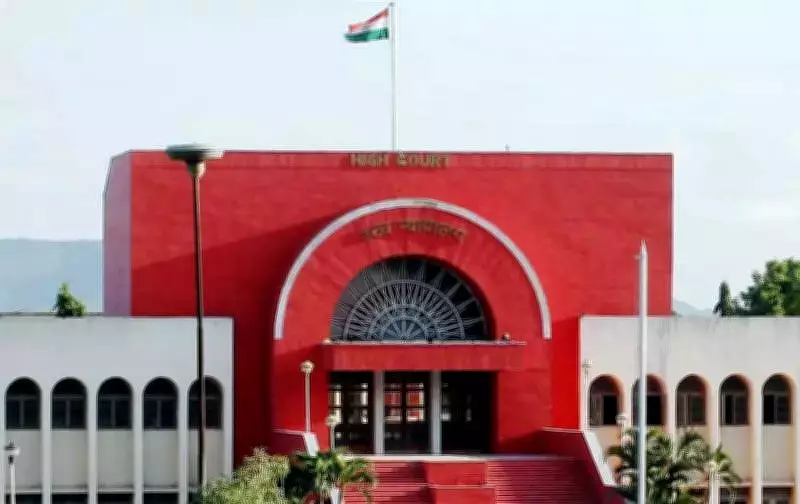
Bombay High Court Strikes Down Aurangabad Road Widening Demolition Notices
In a significant legal development, the Aurangabad bench of the Bombay High Court has set aside demolition notices issued by the Chhatrapati Sambhajinagar Municipal Corporation for proposed road widening projects. The court termed these notices as "void" and suffering from "non-application of mind," providing substantial relief to residents of Satara and Deolai areas who faced potential displacement.
Judicial Bench and Legal Basis
The division bench comprising Justices Vibha Kankanwadi and Hiten S. Venegavkar delivered this landmark judgment on Friday. The court specifically quashed the demolition notices dated February 6, which had been issued under Section 260 of the Maharashtra Municipal Corporation Act. These notices had mandated residents to demolish portions of their residential properties within an eight-day timeframe to facilitate road widening from Renuka Mata Mandir to the Dhule-Solapur Highway, expanding it to 15 meters as part of the Development Plan 2022-2040.
Petitioners and Their Legal Arguments
The legal challenge was initiated through petitions filed by residents Satish Madhavrao Pingle, Gulab Shrimantrao Pawar, Rajkumari Bramhamprakash Thakur, and Amol Madhukar Khillare, represented by advocate Vishal Bakal. The petitioners contested the actions of both the state of Maharashtra and the municipal corporation, presenting compelling arguments regarding the legality of their properties.

- The residents' houses in Satara locality were constructed during 1991-92 with proper authorization from the then-competent gram panchayat
- The land had been officially regularized for non-agricultural use by the collector in 2002
- The municipal corporation could not retrospectively declare these constructions unauthorized without following due legal processes
- Proper land acquisition proceedings for road widening had not been initiated
Court's Critical Observations
The judicial bench expressed strong disapproval of the municipal corporation's approach, emphasizing that "the power is drastic in nature, as it entails demolition of property." The court further clarified that such authority must be exercised strictly in accordance with statutory provisions and in harmony with principles of natural justice.
The bench identified several critical deficiencies in the demolition notices:
- The notices were "conspicuously silent" regarding the precise nature and description of allegedly unauthorized constructions
- The action demonstrated "non-application of mind" by municipal authorities
- Notices with serious civil consequences cannot be legally sustained when they lack material particulars and statutory foundation
Court's Final Ruling and Directions
Based on these findings, the Bombay High Court issued comprehensive directions:
- Set aside all impugned demolition notices completely
- Remitted the matter back to municipal authorities for fresh consideration
- Directed the corporation to reconsider petitioners' replies and submitted documents
- Mandated granting residents an opportunity for personal hearing
- Required authorities to pass detailed, reasoned orders addressing each contention
The bench provided specific guidance for future proceedings, stating that if the corporation still determines any construction to be unauthorized, it must issue fresh notices under Section 260 that clearly specify:
- The precise nature of alleged unauthorized construction
- Detailed description and measurements
- Statutory basis for such conclusions
This judgment establishes important legal precedents regarding municipal authority, property rights, and due process in urban development projects, ensuring that residents' rights are protected while allowing for legitimate urban planning initiatives to proceed through proper legal channels.