Prayagraj High Court Condemns UP Police's 'Knee-Shooting' Encounter Practices
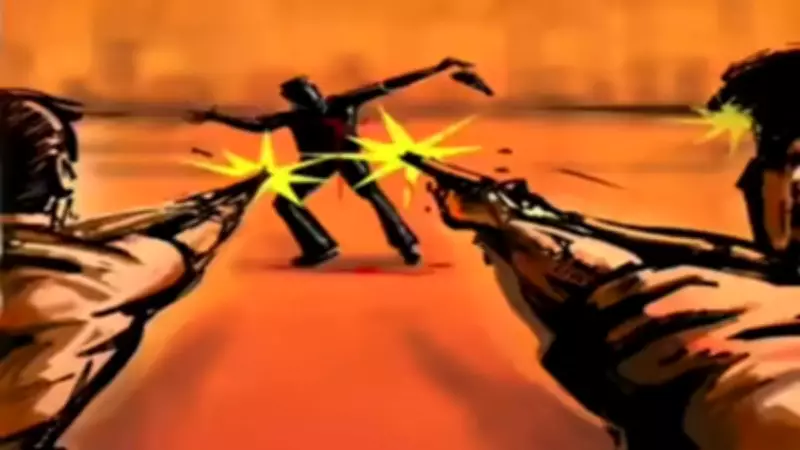
The Allahabad High Court delivered a scathing rebuke to the Uttar Pradesh Police on Friday, taking strong exception to what it described as "frequent" instances of officers shooting crime suspects below the knee during encounters. The court expressed deep concern that such actions were often motivated by desires for "social media fame or out-of-turn promotions," rather than lawful procedure.
Judicial Authority Versus Police Power
Justice Arun Kumar Singh Deshwal, presiding over a single-judge bench, emphasized the fundamental separation of powers in India's democratic framework. "Such an act is not permissible in the eyes of law, as the power of punishment to the accused is the domain of judiciary and not police," he stated unequivocally. The judge further elaborated that India must function according to constitutional ethos, which clearly delineates roles between the legislature, executive, and judiciary.
Addressing Director General of Police Rajeev Krishna and Additional Secretary (Home) Sanjay Prasad during an online hearing, Justice Deshwal asserted, "Police officers cannot be allowed to take the function of judiciary to punish a criminal by unnecessary firing and causing injuries even on non-vital parts of the body."
Case Origins and Supreme Court Violations
The court's directives emerged from a specific case involving suspect Raju alias Rajkumar, who was shot in the leg during a police encounter. Granting him bail on January 28, Justice Deshwal pointed to the police's violation of the Supreme Court's landmark 2014 ruling in the PUCL vs Maharashtra case, which established protocols for police encounters.
During Friday's proceedings, police authorities presented two circulars dated August 1, 2017, and October 11, 2024, as evidence of the state government's commitment to adhering to Supreme Court guidelines regarding encounters resulting in death or grievous injuries. However, the High Court remained unconvinced, noting the persistent frequency of such incidents in Uttar Pradesh.
Mandatory Guidelines and Contempt Warning
In response, the High Court laid down a comprehensive set of guidelines that will now apply to all police-criminal encounters across the state. The court explicitly warned that failure to comply with these directives would be treated as contempt of court.
The newly established protocols include:
- Mandatory FIR Registration: Whenever an encounter involves firearm use resulting in grievous injury, the head of the police party must register an FIR at the same or adjoining police station.
- Independent Investigation: Such FIRs must be investigated by the CB-CID or a police team from another station, supervised by an officer at least one rank above the encounter party head.
- Immediate Medical Assistance: Injured suspects must receive prompt medical care, with their statements recorded by a magistrate or authorized medical officer after fitness certification.
- Judicial Reporting: Complete investigation reports must be submitted to competent courts following Supreme Court procedures.
Justice Deshwal also criticized police leadership for allegedly "incentivising encounters without proper checks in place," highlighting systemic issues that require urgent correction.
These guidelines represent a significant judicial intervention aimed at curbing what the court perceives as excessive and potentially unlawful police practices, reinforcing constitutional safeguards in law enforcement operations.