

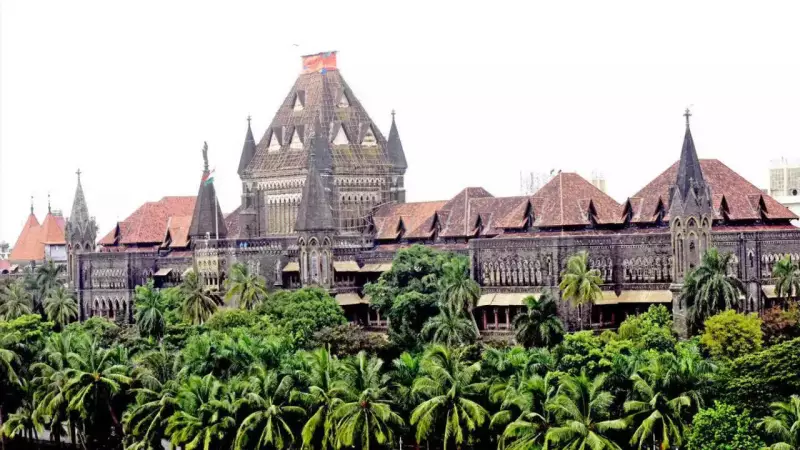
The Bombay High Court took a stern stance on Tuesday, summoning the top civic and pollution control officials to explain the apparent inaction in curbing severe air pollution across Mumbai. The court's move came after a special panel's ground report indicated that implementation of guidelines was severely lacking, and any compliance found was merely "cosmetic."
Court's Impatience with Delays
When the Brihanmumbai Municipal Corporation's (BMC) counsel sought a few days for the civic chief to review the report, the bench of Chief Justice Shree Chandrashekhar and Justice Gautam Ankhad refused. "Nothing doing... Not even one day. We are summoning them [on Tuesday]," the judges stated. They also directed that stop-work notices should be issued at non-compliant sites immediately.
The court is hearing a suo motu Public Interest Litigation (PIL) initiated to tackle the deteriorating air quality in Mumbai and its neighbouring regions. The four-member court-appointed panel, which included advocates and a forest conservator, surveyed 36 sites and prepared a detailed 74-page report.

Alarming Findings Across Major Projects
The panel's findings painted a grim picture of systemic neglect. Senior counsel Darius Khambata, acting as amicus curiae, informed the court that none of the visited sites was fully compliant. The report highlighted a "recurring pattern of incomplete or inconsistent compliance" at high-profile locations including the bullet train project site, a ready-mix concrete (RMC) plant, and the Metro 2B site at Bandra Kurla Complex (BKC). The RMC plant was flagged for showing the "most serious non-compliance."
At the government colony in Bandra East, where the new High Court complex is planned, demolition activities were found to be "generating massive amounts of dust and debris" without any barricades, wet coverings, or dust suppression mechanisms in place.
Systemic Failures and 'Reactive' Measures
The problems were not limited to construction sites. The condition of the Maharashtra Pollution Control Board's (MPCB) own air monitoring station in Mahape, Navi Mumbai, was described as "deeply alarming," reflecting operational failure. Its outdoor display had been non-functional since at least December 11.
In South Mumbai's Fort, Cuffe Parade, and Colaba areas, the panel found fundamental shortcomings in dust control at redevelopment sites. At one 20-storey under-construction building, an AQI monitor was installed but placed on the ground floor, rendering it ineffective.
The report concluded that compliance across 17 under-construction sites, three RMC plants, seven road sites, and five infrastructure sites was more "reactive, rather than proactive." Measures like water sprinklers and smog guns were deployed in a limited, ad-hoc manner. Shockingly, road cleaning activities were often found to be spreading pollution instead of suppressing it.
The panel has recommended urgent actions including real-time monitoring, centralised data integration, and strict accountability at every site. It warned that without these measures, the Air Quality Index (AQI) will deteriorate further and "public health risk will persist unabated." The court has now demanded personal explanations from BMC Commissioner Bhushan Gagrani and MPCB Member-Secretary for the inaction of their officers.






