

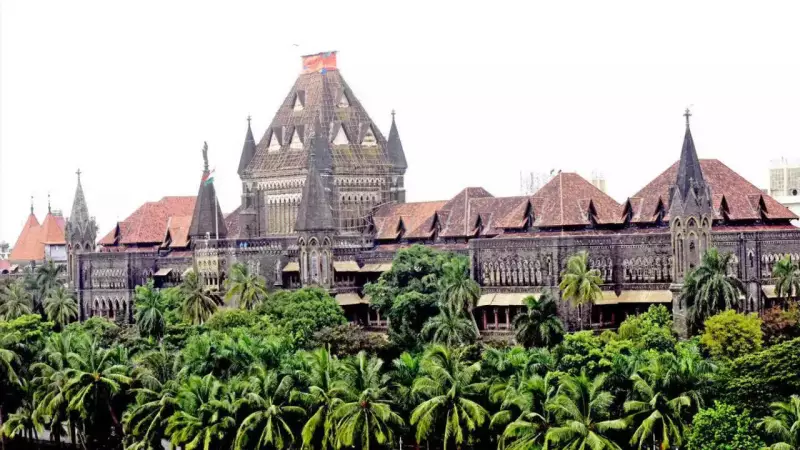
The Bombay High Court has taken a stern stance against the alarming levels of air pollution in Mumbai, summoning the city's top civic and pollution control officials for a personal explanation. This decisive action comes after a court-appointed inspection panel submitted a damning report, revealing widespread and serious non-compliance with air pollution control norms at all 36 sites it surveyed across the metropolitan region.
Court's Stern Summons and Panel's Alarming Findings
A bench led by Chief Justice Shree Chandrashekhar and comprising Justice Gautam Ankhad has ordered BMC Commissioner Bhushan Gagrani and MPCB Member-Secretary to appear in person on Tuesday morning. The court expressed its frustration with administrative inaction, stating it had formed a "prima facie opinion" that the officials must explain the failures of their departments. The bench was unequivocal, orally directing that stop-work notices should be issued at non-compliant sites.
The four-member expert committee, which included advocates and a forest conservator, found that the on-ground implementation of guidelines was severely lacking. Where compliance existed, it was largely "cosmetic" and reactive, only intensifying after the High Court initiated a suo motu Public Interest Litigation (PIL) in response to Mumbai's deteriorating Air Quality Index (AQI). The panel's 74-page report, dated December 15, paints a picture of systemic neglect.

Major Projects and Sites Flagged for Serious Violations
The investigation uncovered a "recurring pattern of incomplete or inconsistent compliance" at several high-profile infrastructure projects. These included the bullet train project site, a ready-mix concrete (RMC) plant, and the Metro 2B site at Bandra Kurla Complex (BKC). The panel singled out the RMC plant for showing the "most serious non-compliance."
At the government colony in Bandra East, where a new High Court complex is planned, demolition activities were found to be "generating massive amounts of dust and debris" without any barricades, wet coverings, or dust suppression mechanisms. The debris was scattered openly across the premises.
In south Mumbai areas like Fort, Cuffe Parade, and Colaba, the panel inspected four construction and redevelopment sites and found poor adherence to BMC guidelines. The report noted that three of these four sites were "almost entirely non-compliant" with basic pollution control and safety measures. At one site, an AQI monitor was installed but was placed on the ground floor of a 20-storey under-construction building, rendering its readings ineffective.
Systemic Failures and Urgent Recommendations
The failures were not limited to construction sites. The condition of the MPCB's own air monitoring station in Mahape, Navi Mumbai, was described as "deeply alarming," reflecting operational failure. Its outdoor air quality display had been non-functional since at least December 11.
The panel's observations pointed to a complete lack of proactive monitoring. Measures like water sprinklers, fogging, and smog guns were deployed in a limited, ad-hoc manner, often only in areas of clear jurisdictional authority. Vehicles carrying demolition waste lacked tracking systems, and road cleaning activities were ironically "often spreading pollution" due to the absence of wetting measures.
Based on its findings, the committee has recommended urgent action, including:
- Complete implementation of existing guidelines.
- Real-time monitoring and centralised data integration.
- Differential standards based on activity type.
- Clear accountability mechanisms for every site.
The panel warned that without these measures, Mumbai's AQI will deteriorate further, and the public health risk will persist unabated. During the hearing, amicus curiae Darius Khambata highlighted the report's findings, while the BMC's counsel sought time for the commissioner to study the report. The Chief Justice's bench firmly refused, stating, "Nothing doing... Not even one day," underscoring the urgency of the matter.






