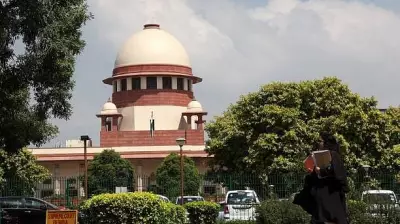
Allahabad High Court Overturns 37-Year-Old Murder Conviction
The Allahabad High Court has delivered a landmark judgment, acquitting a man who had been serving a life sentence for a murder that occurred back in 1987. The court identified significant anomalies in the trial court's 37-year-old verdict, leading to the overturning of the conviction.
Court Cites Infirmities in Original Judgment
In a detailed ruling, the high court stated that the trial court's May 17, 1989 sentence under IPC Section 302 (murder) "suffers from infirmity and is liable to be set aside." This decision came after hearing a criminal appeal filed by Khunni Lal, who had been convicted in the case.
A division bench comprising Justice Siddhartha Varma and Justice Prashant Mishra-I carefully examined the evidence and proceedings. They observed a critical inconsistency: out of the three accused in the case, one was convicted while two were acquitted, all based on the same set of evidence presented during the trial.
Background of the 1987 Farrukhabad Case
According to the prosecution, the incident stemmed from a property dispute in Farrukhabad district. The accused, Khunni Lal, Bhagwan Din, and Jagdish, were related to the complainant, Ram Singh, and shared ownership of half a house and land with him. Tensions escalated when the accused allegedly built their house by encroaching upon Ram Singh's land.
The dispute came to a head on May 9, 1987, when the three accused destroyed Ram Singh's platform (chabutra). Armed with weapons—a knife, pistol, and spear respectively—they confronted the scene. As Ram Singh attempted to grab Jagdish's spear, Bhagwan and Jagdish restrained Mauji, Ram Singh's brother, who was smoking nearby. It was during this altercation that Khunni Lal fatally stabbed Mauji, after which all three accused fled the scene, firing shots.
The incident was reported the following day, leading to a legal process that culminated in the session court's verdict two years later, in which only Khunni Lal was convicted and sentenced to life imprisonment.
High Court's Rationale and Final Order
The high court bench emphasized the inconsistency in the trial court's judgment, where co-accused Bhagwan Din and Jagdish were acquitted despite the same evidence being used against them. This raised serious questions about the fairness and logic of Khunni Lal's conviction.
In its judgment dated February 18, the high court directed that Khunni Lal, who is currently incarcerated, shall be released from jail immediately, provided he is not wanted in any other criminal cases. This ruling not only grants freedom to a man who has spent decades behind bars but also highlights the importance of judicial scrutiny in ensuring justice is served accurately over time.
This case underscores the evolving nature of legal interpretations and the critical role of appellate courts in rectifying past judicial errors, especially in long-pending matters where evidence and procedures may have been mishandled initially.