

Bombay High Court Takes Suo Motu Action to Protect Historic Nagpur Temple and Archaeological Sites
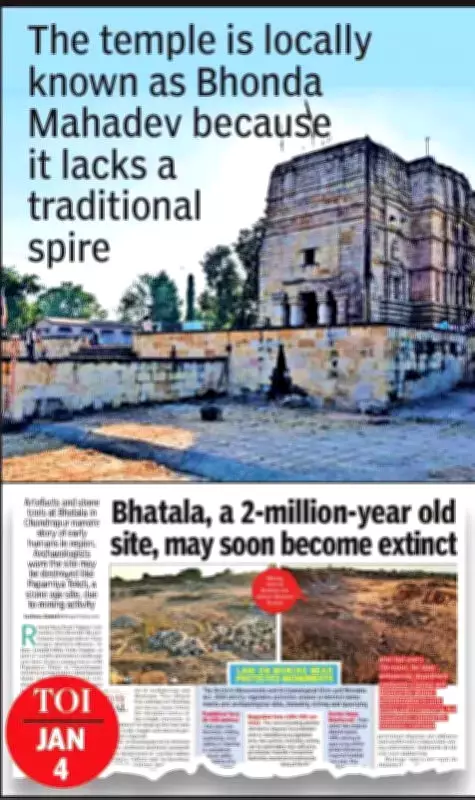
The Nagpur bench of the Bombay High Court has taken a significant step to address the neglect and destruction of historical and archaeological treasures in the Chandrapur district of Maharashtra. On Monday, the court took suo motu cognisance based on a January 4 report in the Times of India, which highlighted the deteriorating condition of the ancient Bhonda Mahadev temple at Bhatala village and the damage to prehistoric sites in Warora taluka.
Court Directives and Legal Proceedings
A division bench comprising Justices Anil Kilor and Raj Wakode has directed the registration of a Public Interest Litigation (PIL) to thoroughly examine the preservation needs of the temple and the broader archaeological landscape. In a proactive move, the court appointed veteran lawyer Bhanudas Kulkarni as amicus curiae to assist in the case. The hearing has been adjourned until March 23, allowing time for preliminary assessments and documentation.
The Historic Bhonda Mahadev Temple
The Bhonda Mahadev temple at Bhatala village is a remarkable architectural relic believed to date back to the 8th or 9th century during the Rashtrakuta period. Constructed from yellow sandstone, this two-storey structure stands approximately 50-60 feet tall and features a traditional mandap and sanctum. Inside the sanctum resides one of the largest Shiva lingas in the Vidarbha region, carved from a single block of black stone. This impressive linga measures nearly 10 feet in length and rises about 4 feet from the ground.

The temple is locally known as Bhonda Mahadev due to its unique architectural feature—it lacks a traditional spire. Scholars have noted that the origin of the massive black stone used for the linga remains a mystery, as such stone is not naturally found in the surrounding area. Historical evidence suggests that the Rashtrakutas had a strong presence in the region around ancient Bhadrawati, also known as Bhandak. Historians believe the temple was likely built by Rashtrakuta rulers or their feudatories, who were known followers of Shaivism. The temple continues to attract devotees, particularly during the three-day fair held annually during the Maha Shivaratri festival.
Prehistoric Archaeological Sites at Risk
In addition to the temple, the court has taken note of media reports detailing the destruction of prehistoric archaeological sites at Bhatala and nearby Mowad village. These sites preserve crucial evidence of human habitation dating back to the Palaeolithic period, offering invaluable insights into early human history in the region.
Research conducted by the Department of Ancient Indian History, Culture, and Archaeology at Nagpur University has documented the presence of Acheulian stone tools in the area. These tools include axes, cleavers, scrapers, and picks, which are indicative of early human technological advancements. Experts attribute the ongoing damage to these sites to several factors, including unregulated stone extraction, natural erosion, and a severe lack of conservation measures. The absence of protective regulations has left these prehistoric treasures vulnerable to irreversible harm.
Broader Implications and Conservation Efforts
The court's suo motu action underscores the urgent need for comprehensive conservation strategies to protect India's rich cultural and historical heritage. The PIL aims to not only address the immediate threats to the Bhonda Mahadev temple and prehistoric sites but also to establish a framework for the preservation of other vulnerable archaeological locations in the region. This legal intervention highlights the critical role of judicial oversight in safeguarding national heritage against neglect and destruction.
As the case progresses, stakeholders including archaeologists, historians, and local communities will be closely monitoring the developments. The appointment of an amicus curiae ensures that expert opinions will be considered in formulating effective preservation plans. The outcome of this PIL could set a precedent for similar conservation efforts across the country, emphasizing the importance of protecting historical sites for future generations.






