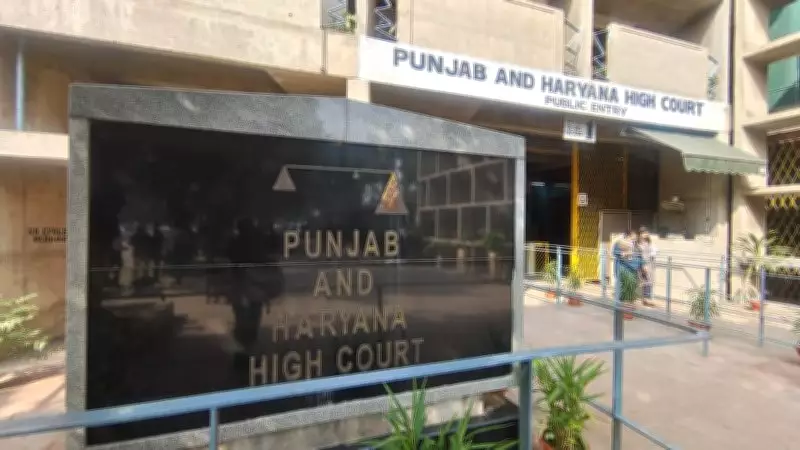
The Punjab and Haryana High Court has dismissed a writ petition from an applicant for the post of Assistant District Attorney (ADA) in Haryana, ruling that computers have become 'omnipresent and essential for survival' and that mere oversight cannot justify judicial interference in a recruitment process already underway.
Court Rejects Plea for Relaxation in Online Application Requirement
Justice Nidhi Gupta, presiding over the case, observed that candidates aspiring to public positions must adhere strictly to prescribed instructions and timelines. The petitioner had sought directions to accept his online application and issue an e-admit card, after discovering his application was marked 'incomplete' due to a missed technical step.
The recruitment advertisement was issued on August 8, 2025, with applications accepted from August 13 to September 2, 2025. The petitioner submitted his application, documents, and fee within the deadline. However, on June 27, 2026, when trying to download his e-admit card, he learned it was not issued because his application was incomplete.

Petitioner Claimed Technical Oversight
The petitioner argued that after submitting the application, he was required to take a printout, convert it to PDF, and upload it on the portal. He claimed this requirement 'escaped his notice' because there was no mandatory tab indicating the step before submission. He described the omission as a 'technical issue' and requested an opportunity to upload the PDF and receive an e-admit card.
The state opposed the petition, stating the e-admit card could not be issued due to the petitioner's own mistake, and urged dismissal.
Court Cites 'Rank Carelessness' and Lack of Diligence
Justice Gupta noted that the petitioner himself admitted the failure to take a printout, convert to PDF, and upload. The court observed this reflected 'rank carelessness' and an 'utter lackadaisical attitude and carelessness'. The court highlighted that the advertisement was issued on August 8, 2025, and the application deadline was September 2, 2025, with the e-admit card issuance extended to June 27, 2026. Yet the petitioner made no attempt during this long period to verify his application status.
The bench also recorded that the petitioner visited the office on June 29, 2026, where he learned of the defect with the help of a clerical staff member. The court rejected the explanation that the omission was inadvertent, stating: 'Merely to say mistake on the part of the petitioner was due to oversight and not intentional is not a sufficient ground to interfere with the examination process.'
Computers 'Omnipresent' Argument Dismissed
The petitioner also contended that his computer-related knowledge was not extensive. Justice Gupta dismissed this as baseless, observing: 'Contention of the petitioner that his computer related knowledge is still not vast is baseless as computers are omnipresent and essential for survival in today's age. The same constitutes no ground for issuance of direction as prayed for.'
The court emphasized that adherence to simple instructions and timelines in submitting application forms is imperative to maintain the sanctity of the recruitment process and prevent administrative chaos. 'This discipline and alertness is especially required if the candidate is aspiring to a public position,' the bench added.
Petition Dismissed
Concluding that there was no merit in the petition, the high court dismissed the writ petition, upholding the recruitment process as conducted.