

Bombay High Court Raises Alarm Over Debt Recovery Tribunal Operations
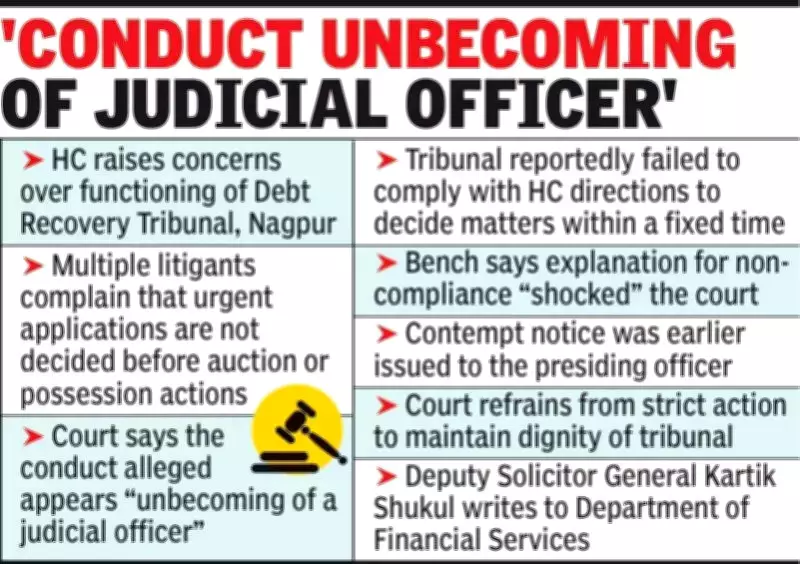
The Nagpur Bench of the Bombay High Court has expressed profound concern regarding the operational efficiency and judicial conduct of the Debt Recovery Tribunal (DRT). A division bench comprising Justices Anil Kilor and Raj Wakode made these critical observations while hearing a consolidated batch of petitions that highlighted systemic delays in adjudication, particularly in cases requiring urgent interim relief.
Repeated Complaints and Judicial Conduct Under Scrutiny
The court noted that over the past several months, multiple petitions have surfaced, all echoing a similar grievance: applications and proceedings pending before the tribunal, including urgent pleas seeking stays on auction proceedings or possession actions, were not being decided before coercive measures were initiated against borrowers. The bench emphasized that if these allegations prove accurate, they reflect conduct that appears "unbecoming of a judicial officer" and warrant immediate corrective action.
Furthermore, the judges recorded their apprehension over the tribunal's failure to adhere to earlier directives issued by the high court, which mandated the disposal of specific proceedings within a stipulated timeframe. This non-compliance has exacerbated the backlog and undermined the tribunal's credibility.

Shocking Explanation and Contempt Proceedings
During the hearing, the court scrutinized the explanation provided by the tribunal's presiding officer for the delay in obeying the high court's order. The officer contended that because writ petitions related to the matter were still pending before the high court, the tribunal did not comply with the directions requiring disposal within the prescribed period. The bench described this reasoning as "shocking" and unequivocally stated that such justification cannot validate the non-compliance with a judicial order.
The court also acknowledged that a contempt notice had previously been issued to the presiding officer. However, in an effort to preserve the dignity of the tribunal, the bench indicated it was still attempting to avoid taking more stringent punitive actions, though the situation remains under close review.
Government Intervention and Future Proceedings
In response to these developments, the court requested Kartik Shukul, the Deputy Solicitor General of India (DSGI), to communicate its grave concerns to the appropriate authorities within the Union government. Shukul informed the bench that he had already dispatched a detailed letter dated March 2, 2026, to the joint secretary of the Department of Financial Services, highlighting the issues and the high court's apprehensions.
Taking note of this submission, the bench directed the DSGI to formally place the correspondence on record by the next hearing date. This step is crucial for ensuring transparency and accountability in addressing the tribunal's operational deficiencies.
Background of the Petitions
The matter originates from a batch of petitions, including one filed by Gajanan Burghate and another against the Debt Recovery Tribunal through its presiding officer. Connected writ petitions filed by Arvind Chikar and Rajan Bokde are also part of these proceedings. The petitioners have raised significant grievances over prolonged delays in the tribunal's processes, such as the pendency of an interlocutory application seeking the production of original loan and mortgage documents. According to their claims, these applications have remained undecided for several months, causing substantial hardship.
The high court has scheduled the matter for further hearing and is expected to conduct a comprehensive examination once the Union government submits the relevant communication on record. This ongoing judicial oversight underscores the critical need for timely and efficient resolution in financial dispute cases to uphold the principles of justice and fairness.






