Orissa High Court Takes Stern Action Against Illegal Mining Operations
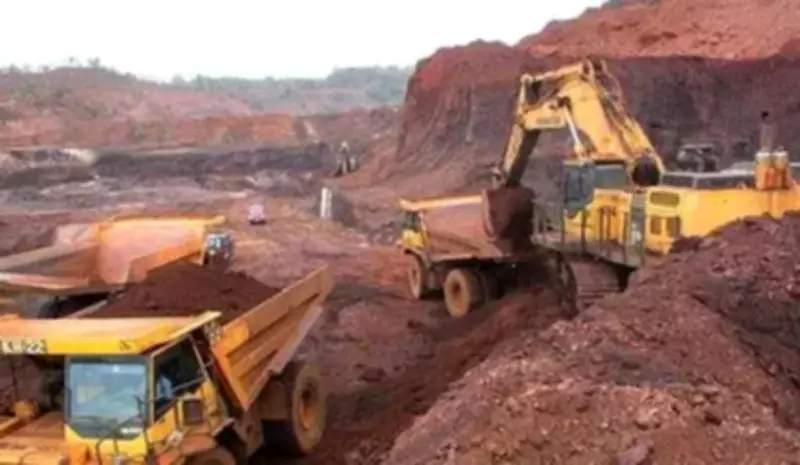
In a significant move to address rampant illegal mining activities, the Orissa High Court has issued urgent interim directions to law enforcement and transport authorities. The court's intervention targets the districts of Mayurbhanj and Balasore, where unauthorized mining continues despite clear Supreme Court mandates.
Judicial Concern Over Mining Scandal
A division bench comprising Chief Justice Harish Tandon and Justice M S Raman expressed deep concern while hearing a Public Interest Litigation (PIL) on Tuesday. The bench observed that although the Supreme Court had previously shown "deep concern over the mining scandal of enormous proportions" in Odisha, "the reality is a far cry" from expected compliance.
The court specifically referenced the landmark Supreme Court verdict in the 'Common Cause vs Union of India and Others (2017)' case, which established multiple safeguards to prevent illegal mining activities. The bench emphasized that "each day of permitting such illegal mining to continue causes a loss to the national assets," highlighting the economic and environmental consequences of these unauthorized operations.

Immediate Police and Transport Directives
The High Court has directed Superintendents of Police in both Mayurbhanj and Balasore districts to deploy adequate police personnel at mining sites immediately. Authorities must verify all mining documents and take prompt action against any violations discovered during inspections.
Additionally, the regional transport officer has been ordered to form special teams with specific responsibilities:
- Intercept vehicles transporting minerals across the state
- Seize vehicles lacking valid documentation under the Mines and Minerals (Development and Regulation) Act, 1957
- Implement rigorous checks to prevent illegal mineral transportation
Petition Details and Tribal Area Concerns
The PIL was filed by Jayanta Kumar Rout and four other petitioners who alleged indiscriminate blasting by mining mafias and "complacency on the part of the administration." According to the petition, illegal mining has not only continued in Mayurbhanj but has also spread to neighboring Balasore district.
The bench noted with particular concern that minerals represent "natural resources and assets of the government" and stressed that failure to act decisively results in substantial loss to national wealth. This concern is especially acute in tribal-dominated areas, where the court observed that Mayurbhanj is "dominantly occupied by tribal areas" and Balasore likely shares similar demographic characteristics.
Government Response and Administrative Gaps
While advocate Lalatendu Samantaray represented the petitioners, additional government advocate Sanjay Rath appeared for the state. The court noted that although government submissions detailed steps taken in Mayurbhanj, there was "complete conscious silence" regarding Balasore district.
The bench further recorded evidence from a communication dated September 23, 2025, in which the mining officer of Mayurbhanj alerted his Balasore counterpart about illegal excavation activities. The communication specifically flagged that mafias from Balasore were using heavy machinery to conduct unauthorized mining operations in Mayurbhanj.
Supreme Court Directives Not Fully Implemented
The High Court expressed disappointment that "the steps and the remedial measures as suggested/directed by the Supreme Court have not been put with full rigour and force." The bench stated unequivocally that "had it been so, rampant illegal mining in the district of Mayurbhanj would not have been possible."
This observation underscores the gap between policy directives and ground-level implementation, suggesting systemic failures in enforcement mechanisms.
Next Steps and Compliance Timeline
The state government has been granted three weeks to file a comprehensive affidavit detailing their response and planned actions. The matter is scheduled for further hearing on March 10, when the court will review compliance with its interim directions and assess the effectiveness of measures taken.

This judicial intervention represents a crucial step toward protecting national assets and ensuring that Supreme Court directives regarding mineral resource management are properly implemented in Odisha's vulnerable tribal regions.