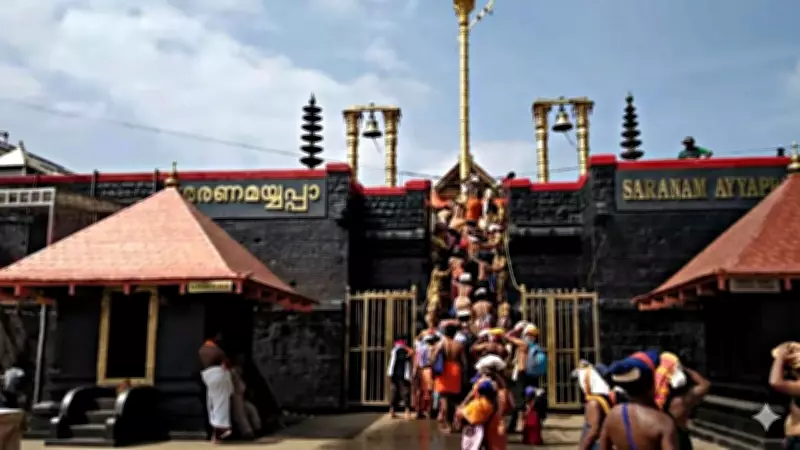
Kerala High Court Orders Exhaustive Probe into Dubious Sabarimala Temple Transactions
The Kerala High Court has directed a comprehensive investigation into suspicious financial transactions involving employees of the Sabarimala temple, following revelations of lakhs of rupees being sent via money orders during the recent festival season. This development comes after the court had previously ordered a probe into alleged gold theft from temple artefacts, highlighting ongoing concerns about financial malpractices at the revered shrine.
Court Directs Vigilance Officer to Investigate Bank and Postal Remittances
Acting on a report submitted by the Sabarimala special commissioner, a division bench comprising Justice Raja Vijayaraghavan and Justice K V Jayakumar has mandated the Chief Vigilance and Security Officer of the Travancore Devaswom Board to conduct an exhaustive investigation. The probe will encompass all related aspects, including obtaining detailed transactional and remittance data from various banks and financial institutions operating at the temple premises.
The vigilance officer has been instructed to compile a database of all employees who were on duty at Sannidhanam during the recent festival season, spanning from November 15 to January 20. This step aims to ascertain the full extent of any fraudulent activities or suspicious fund transfers that may have occurred.

Suspicious Money Order Transactions Uncovered
According to the vigilance officer's report presented to the court, data collected from post offices and banks at the temple revealed alarming patterns of suspicious transactions. Specifically, the enquiry uncovered that an amount of Rs 14,08,880 was transferred through money orders from the Post Office alone within a short period. This finding has raised serious questions about the source and legitimacy of these funds.
The court noted specific instances where individual employees made substantial remittances. For example, one employee remitted Rs 1,38,000 via the post office, while another's remittance totaled Rs 1,07,450. Similar patterns were observed in three other cases, indicating a potential systemic issue.
Non-Compliance and Need for Detailed Enquiry
Despite directives from the vigilance officer for these individuals to undergo an enquiry, they allegedly failed to comply with the instructions. In response, the court emphasized that a detailed and comprehensive enquiry is imperative. This includes collecting transactional particulars from the concerned banks and postal authorities to build a complete picture of the financial irregularities.
The Travancore Devaswom Board has informed the court that it has issued directions to gather details on all suspicious and dubious transactions. Furthermore, the board has assured that a case will be registered in accordance with the law once the investigation is complete.
This probe underscores the High Court's commitment to ensuring transparency and accountability in the management of temple funds, particularly during high-traffic periods like the annual festival season at Sabarimala.