Hyderabad High Court Overturns Police Decision, Grants BRS Permission for Public Meeting in Wanaparthy
In a significant legal development, the Hyderabad High Court on Wednesday granted permission to the Bharat Rashtra Samithi (BRS) to conduct a public meeting at Dharna Chowk near Gollapally village gate in Wanaparthy district. This decision came after the Wanaparthy police had rejected the permission application, citing security concerns that the proposed location falls within a Maoist-affected area.
Legal Challenge Against Police Order
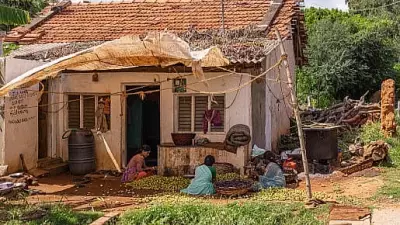
The court's intervention followed a petition filed by BRS Wanaparthy district president Gattu Yadav, who challenged the Superintendent of Police's order that cancelled permission for the gathering. The meeting was originally organized by farmers from Thalpanoor, Revalty, Yedula, Cheekapally, Chennaram, and Gollapally villages to voice their opposition against the construction of the Gollapally reservoir in the district.
Interestingly, permission had initially been granted by the Deputy Superintendent of Police (DSP) of Wanaparthy, but this approval was subsequently revoked by the SP, prompting the BRS to seek judicial recourse.

Court Imposes Strict Conditions for Gathering
Disposing of the petition, Justice EV Venugopal issued specific directives to ensure the meeting proceeds peacefully and within legal boundaries. The court ordered that the gathering must be held strictly between 5 PM and 9 PM on Thursday, with attendance limited to only 1,000 participants.
Furthermore, Justice Venugopal explicitly directed the BRS to ensure that politicians attending the event refrain from delivering any speeches that could incite violence or unrest. These conditions aim to balance the right to peaceful assembly with public safety concerns in an area with known security challenges.
Background and Implications
This case highlights the ongoing tension between political expression and security considerations in regions affected by Maoist activities. The farmers' opposition to the Gollapally reservoir project adds another layer to this gathering, connecting infrastructure development concerns with political mobilization.
The court's decision underscores the judiciary's role in mediating between law enforcement priorities and constitutional rights to assembly and free speech. By setting clear parameters for the event, the High Court has attempted to create a framework that allows democratic expression while addressing legitimate security apprehensions raised by local police authorities.