

Honeymoon Couple Among Stranded Passengers as Gulf Tensions Disrupt Air Travel
What was meant to be a dream honeymoon swiftly transformed into days of profound anxiety for 27-year-olds Raghav and Varsha Gupta after escalating regional tensions severely disrupted air travel across the Gulf region, compelling them to endure an extended wait for a secure journey back to India. The couple had embarked on their romantic getaway to Dubai and Abu Dhabi on February 22, only to find themselves within days witnessing missile interceptions illuminating the night sky and ominous plumes of smoke rising in the distance.
Hotel Safety Measures and Airport Chaos
"They were at their hotel when they first heard a missile overhead," recounted Raghav's 60-year-old mother, Niranjana, speaking anxiously outside Terminal 3 of Indira Gandhi International Airport on Monday evening. "Everyone was visibly shaken. The hotel management promptly asked all guests to move to the lobby for enhanced safety, arranged for food provisions throughout the night, and even extended shelter to those stranded at the nearby airport," she explained, noting that this was a trip the young couple had been eagerly anticipating for months.
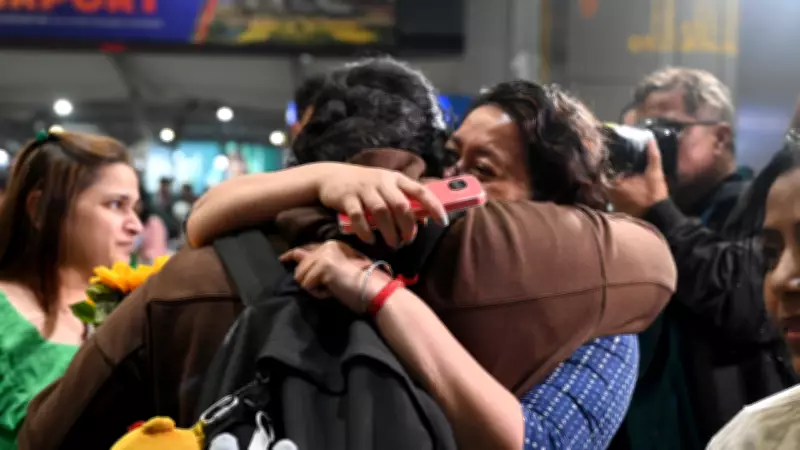
By Monday morning, the airline had organized school buses to transport passengers to Abu Dhabi airport. When Raghav finally emerged from the arrival gate in Delhi, clutching his six-month-old niece tightly, the entire family broke into tears of relief. "The situation there remains tense, but local authorities appear to have it under reasonable control," he stated cautiously. The couple were among 310 passengers aboard the Etihad flight that successfully reached Delhi.

Extended Layovers and Family Reunions
Twenty-five-year-old Neeraj Rani, a law student based in Canada, was traveling home last Friday with what should have been a brief layover in Abu Dhabi. Instead of a short stopover, she found herself stranded at the airport for two full days after a missile strike disrupted normal operations. With tears streaming down her face, she embraced her 52-year-old father, Devendra Kumar, immediately upon landing. "People there are genuinely scared," she revealed emotionally. Kumar admitted that the prolonged uncertainty had left the entire family in Delhi terrified, recalling how they remained glued to news broadcasts and monitored every available update.
For some residents, the decision to return home was immediate and urgent. Thirty-year-old Sanjana, who lives in Abu Dhabi, traveled to Delhi with her one-year-old baby as soon as tensions escalated dramatically. Describing the atmosphere as utterly terrifying, she noted that it was the calm demeanor of those around her that provided crucial reassurance. "Seeing my neighbors carry on with their daily routines made me feel that things were still somewhat under control," she explained. Her husband has remained in Abu Dhabi for work commitments, and she plans to return once the situation stabilizes sufficiently.
Passenger Experiences and Government Response
Passengers with scheduled layovers in Abu Dhabi reported being shifted to nearby hotels where they were provided with meals and basic amenities after numerous flights were abruptly cancelled. Several travelers added that authorities sent regular push notifications during the attacks and that missiles could be seen being intercepted swiftly in the night sky, demonstrating defensive measures in real-time.
Sixty-year-old Nashattra Singh, who lives in Germany and had been traveling from Barcelona to attend a wedding in India, observed, "Everyone there is very scared, but they were taking exceptionally good care of us, so we managed to remain relatively calm." Similarly, Aashna Khurana, a 25-year-old technology professional from Delhi who was headed to Barcelona for an important business meeting, described constantly hearing missile sounds and seeing smoke. "My friends and colleagues in Dubai and Doha were in constant touch with me, providing detailed descriptions of the unfolding situation," she added.

Emotional Homecomings and Future Uncertainties
For the numerous families gathered anxiously at the airport, seeing their loved ones walk through the arrival gate represented not merely a routine homecoming but a powerful reminder that even after days of intense fear and profound uncertainty, they were finally safe on home soil. The collective experiences highlight the broader impact of regional conflicts on civilian travel and the resilience displayed by both passengers and authorities during such crises.
As tensions continue to simmer in the Gulf region, many travelers remain uncertain about future plans, with some opting to postpone international travel until stability returns. The incident underscores the vulnerability of global air travel networks to geopolitical disruptions and the importance of coordinated emergency responses to ensure passenger safety during international crises.





