

Court Hears of Idols in British Museum in Bhojshala Dispute Case
INDORE: During a hearing on the Bhojshala-Kamal Maula mosque dispute case on Monday, the Indore bench of the Madhya Pradesh high court received a significant submission. The court was informed that two idols, specifically of Vaghdevi (Goddess Saraswati) and Amba, were recovered from the Bhojshala site in Dhar during the colonial period. These idols are currently housed in the British Museum in London, highlighting the historical and cultural dimensions of the case.
Legal Arguments Focus on Worship Rights
The counsel for Hindu Front for Justice, advocate Vishnu Shankar Jain, presented this information before the bench, which comprised Justice Vijay Kumar Shukla and Justice Alok Awasthi. This hearing marked the beginning of the final proceedings in the long-standing dispute. Jain clarified that the petition filed by Hindu Front for Justice does not concern ownership or possession of the site. Instead, he emphasized, "This is not a case for ownership or possession. This is a case for the right to worship," setting the tone for the legal arguments.
Challenges to ASI Order and Historical Context
Jain referenced an order dated April 7, 2003, issued by the Archaeological Survey of India (ASI). This order permits Muslims to offer namaz at the site on Fridays and allows Hindus to worship on specified occasions such as Basant Panchami. However, Jain argued that this order is legally untenable because it was issued without any prior determination of the true character of the site. He pointed to Section 16 of the Ancient Monuments and Archaeological Sites and Remains Act, 1958, which states that a protected monument used as a shrine or place of worship must not be used for purposes inconsistent with its original character.

Jain elaborated, "...The authorities must first ascertain the character of the place of worship and then ensure no action is inconsistent with that character." He further stressed that courts should take notice of historical texts, gazetteers, and scholarly works when dealing with matters involving ancient history, underscoring the importance of evidence in such disputes.
ASI Survey Findings and Implications
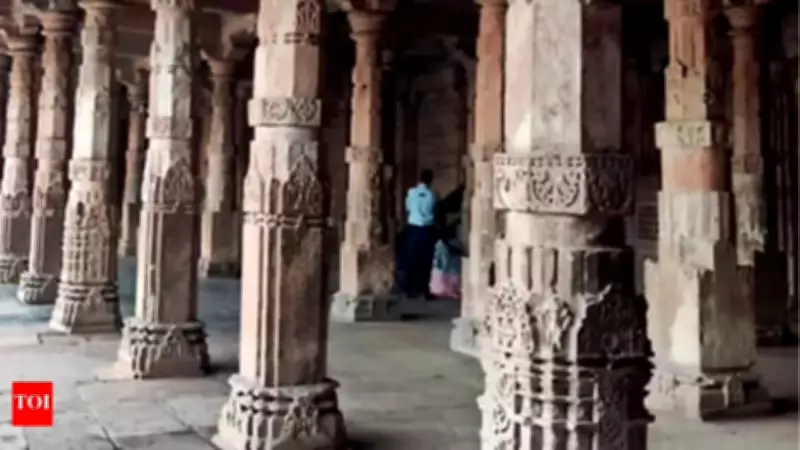
The ASI had conducted an extensive 98-day survey at the site, submitting a detailed report that runs into over 2,000 pages. According to this report, the existing structure was constructed using remains of Hindu temples from the Parmar era. This finding adds weight to the arguments regarding the site's original character and supports the need for a thorough legal examination.
The case continues to draw attention due to its implications for religious rights and historical preservation, with the court now tasked with balancing these complex factors based on the evidence presented.






