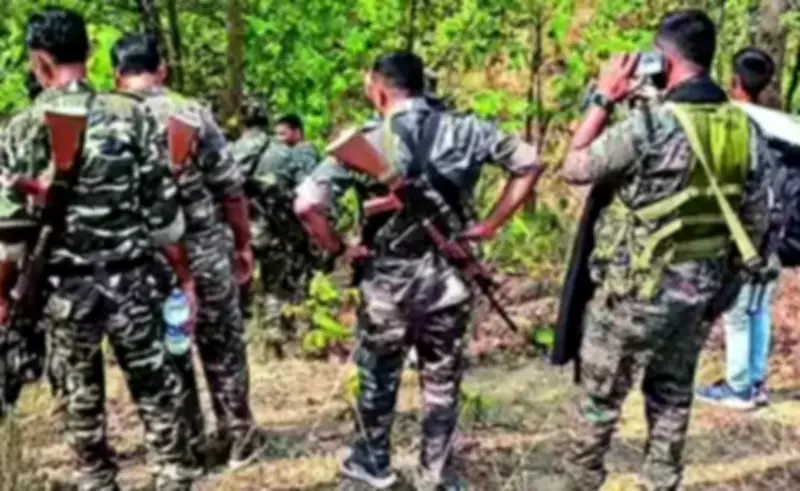
New Delhi: With the crucial March 31, 2026 deadline for achieving a "Naxal-free" India rapidly approaching, security forces have entered the decisive phase of intelligence-driven operations. Their primary objective is to apprehend the remaining 'Big Four' leaders of the CPI(Maoist) organization, which includes three politburo-cum-central committee members and one central committee member. Additionally, forces are targeting an estimated 300-350 regular, uniformed cadres who remain active in jungle hideouts across several states.
Time Running Out for Maoist Leadership
Bastar Range Inspector General P Sundarraj emphasized the narrowing window for these leaders and full-time cadres. "Time is running out for these leaders and full-time cadres spread across Chhattisgarh, where approximately 200-250 are located, with no more than 10-20 each in Telangana, Jharkhand, Odisha, and Maharashtra," he stated. "They must choose between eschewing the path of violence and being confronted by security forces in their hideouts across the Indravati national park area, small pockets of Jharkhand, and the inter-state borders of Chhattisgarh, Odisha, Maharashtra, and Telangana."
The Elusive 'Big Four' Leadership
Currently, only four surviving politburo and central committee members remain, with two not known to be actively participating in operations. Thippiri Tirupathi alias Devji has emerged as the de-facto number one leader, though he hasn't been formally appointed as the CPI(Maoist) general secretary. The former general secretary, Muppalla Laxman Rao alias Ganpathy, is in his late seventies and reportedly suffering from health issues.

Misir Besra, who leads the CPI(Maoist) Eastern Regional Bureau following the arrest of his predecessor Prashant Bose in 2021, represents the only non-Telugu face in the politburo. He is currently operating in Jharkhand, where his close aide and central committee member Patiram Manjhi alias Anal Da was killed just days ago. Security forces have already intensified their pursuit of Besra following this development.
Leadership Crisis and Operational Challenges
While some state police agencies include a fifth central committee member, Asim Mondal, in their active lists, there remains division among security experts about whether he truly holds committee membership. Devji, despite his current position as the top CPI(Maoist) leader, faces significant challenges due to the series of killings and surrenders among his politburo and central committee colleagues, senior commanders, and armed cadres over the past year.
A senior security officer revealed, "There have been multiple public appeals for surrender, including at the political level, but Devji may prefer to go down fighting, holding on to Maoist ideology." This determination presents a complex challenge for security forces attempting to resolve the situation through both operational and persuasive means.
Significant Neutralizations and Ongoing Threats
Between January 1, 2025, and January 22, 2026, security forces achieved substantial success by neutralizing a dozen central committee members, including general secretary and politburo member Basavaraju. During this period, five other members chose to surrender to authorities.
Despite these successes, two senior commanders remain at large: Pappa Rao and Prabhakar, both members of the Dandkarenya special zonal committee. Intelligence reports indicate they are active in the inter-state border regions of Maharashtra and Chhattisgarh, particularly covering areas including Kanker, Gadchiroli, and territories south of the Indravati river.
Strategic Implications and Future Operations
The approaching deadline has created a sense of urgency in security planning and execution. Operations have become increasingly focused on specific geographical areas where intelligence suggests remaining leadership elements are concentrated. The inter-state coordination between security forces of affected states has intensified, with shared intelligence and joint operations becoming more frequent.

Security analysts note that the reduced numbers and fragmented leadership structure have made remaining cadres more vulnerable, but also potentially more desperate. The final push before the 2026 deadline represents both an opportunity to decisively weaken the Maoist movement and a challenge to ensure operations minimize collateral impact on local populations.