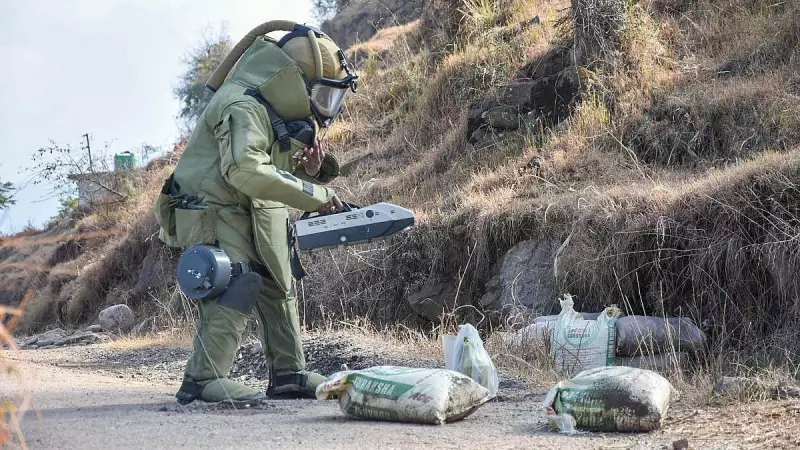
In a significant move to fortify its national security framework, India has formally introduced its first-ever standardized protocol for bomb disposal systems. This landmark development aims to bring uniformity, enhanced safety, and greater effectiveness to the critical work of bomb squads across the country.
A Standard Born from Strategic Need
The new benchmark, designated as IS 19445:2025, was created following a specific request from the Union Ministry of Home Affairs (MHA). The technical development was spearheaded by the Terminal Ballistic Research Laboratory (TBRL), a premier defence research laboratory under the Defence Research and Development Organisation (DRDO). The standard was officially published on 27 December 2025.
This initiative addresses a long-standing requirement for a common, high-quality benchmark governing the equipment and procedures used in neutralizing improvised explosive devices (IEDs) and other hazardous ordnance. Prior to this, procurement and deployment could vary widely, potentially affecting operational efficiency and personnel safety.

What the New Standard Entails
While the full technical details of IS 19445:2025 are specialized, its primary objective is to establish stringent quality and performance parameters for bomb disposal systems. This includes specifications for:
- Robotic disposal vehicles and their capabilities.
- Protective suits for bomb disposal officers.
- Disruption tools and containment vessels.
- Detection and diagnostic equipment.
By setting these national guidelines, the standard ensures that security agencies, both central and state, procure interoperable and reliable equipment that meets a certified level of performance and safety.
Implications for India's Security Infrastructure
The introduction of this standard is more than a technical formality; it represents a strategic upgrade to India's domestic security preparedness. It directly supports the modernization drives of central armed police forces and state police units that handle bomb threats.
The move will lead to more predictable and effective responses during security emergencies, terrorist incidents, or when dealing with unexploded ordnance. Furthermore, it provides a clear framework for Indian manufacturers in the defence and security sector, encouraging indigenous production of standardized, high-quality bomb disposal gear. This aligns with the broader national goals of self-reliance (Atmanirbhar Bharat) in defence manufacturing.
In conclusion, the launch of IS 19445:2025 marks a pivotal step in professionalizing and standardizing a very high-risk facet of India's internal security apparatus. It underscores a proactive approach to mitigating explosive threats through science, standardization, and strategic policy.