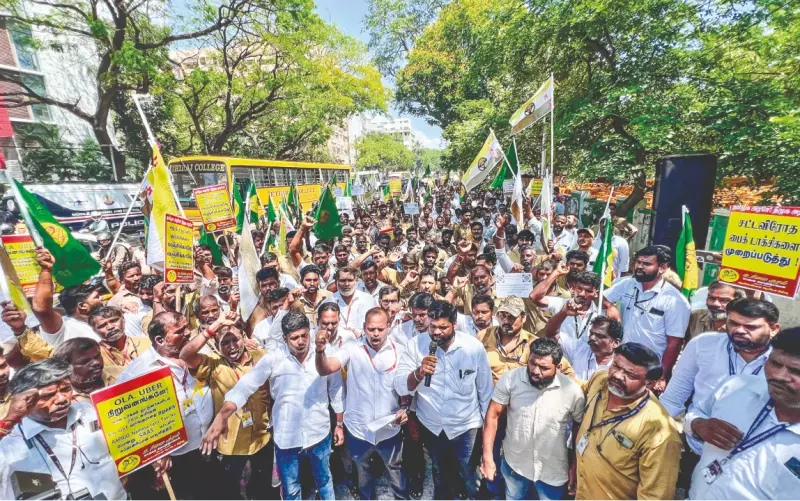
After nearly six years of deliberation, the Indian government has implemented four new labour codes, with the Industrial Relations Code (IR Code 2020) taking effect from November 21, 2025. This landmark legislation consolidates three historic acts: the Trade Unions Act of 1926, the Industrial Employment (Standing Orders) Act of 1946, and the Industrial Disputes Act of 1947. While the Centre champions the code as a catalyst for business ease, trade unions warn it signals the erosion of long-term job security, sparking intense nationwide debate.
Fixed-Term Employment: A Formalised 'Hire and Fire' Model?
One of the most contentious provisions is the formalisation of fixed-term employment under Section 2(o) of the new code. This allows employers to explicitly define the start and end dates of employment at the hiring stage. Critics argue this institutionalises short-term contracts, enabling companies to let workers go automatically upon contract expiry without the protections afforded to permanent staff.
The concept isn't entirely new; it was first introduced in 1984. However, the IR Code elevates it from an exception to a regular employment mode. The government posits this as a win-win that will reduce contractualisation, as fixed-term employees are entitled to wages, gratuity, and benefits equal to permanent workers. Yet, skeptics counter that from a cost perspective, traditional contract labour remains cheaper for employers, making fixed-term roles merely short-term jobs with better pay, not a true alternative to contractualisation.

Stricter Rules on Strikes and Higher Threshold for Layoffs
The code significantly curtails the right to strike. Sections 2(zk) and 62 now mandate strike notices even in non-public utility services, a requirement absent in previous laws. It also prohibits strikes during conciliation proceedings and while industrial adjudication on the same dispute is pending. The Centre believes this fosters negotiation and orderly dispute resolution, but unions see it as placing workers under prolonged legal restraint, stripping them of a crucial bargaining tool.
Another major shift is the increased threshold for government permission regarding layoffs, retrenchment, and closures. The limit has been raised from 100 to 300 workers, based on the average working-day strength over the preceding year. Unions fear this could trigger large-scale job losses, as medium-sized industries with under 300 workers no longer need official approval. The government's rationale is that it allows firms, especially SMEs, to adapt swiftly to economic fluctuations.
Trade Union Recognition and The Road Ahead
The IR Code introduces formal mechanisms for trade union recognition (Sections 5 to 27), addressing a long-standing gap in Indian labour law. This provision ends the ability of employers to refuse recognition to unions with large memberships, while also preventing management-friendly unions with minimal support from gaining recognition. This has the potential to create more stable industrial relations, though it causes apprehension on both sides.
The merits and drawbacks of the IR Code 2020 demand pragmatic debate. With labour being a concurrent subject, states are framing their own rules, risking uneven labour standards across India. As noted by advocate S Ravindran, suitable amendments by both Union and state governments, balancing the interests of industry and workers, will be crucial for peaceful industrial growth. The true impact of these sweeping changes will unfold in the coming years.