Iran's Strike on Saudi Arabia Forces Pakistan to Choose Between Alliance and Survival
In a dramatic escalation of Middle Eastern tensions, Iran's retaliatory strike against Saudi Arabia has placed Pakistan in an impossible geopolitical position, forcing Islamabad to choose between honoring a critical defense alliance and avoiding a potentially devastating conflict with a neighboring power.
The Strategic Mutual Defence Agreement Tested
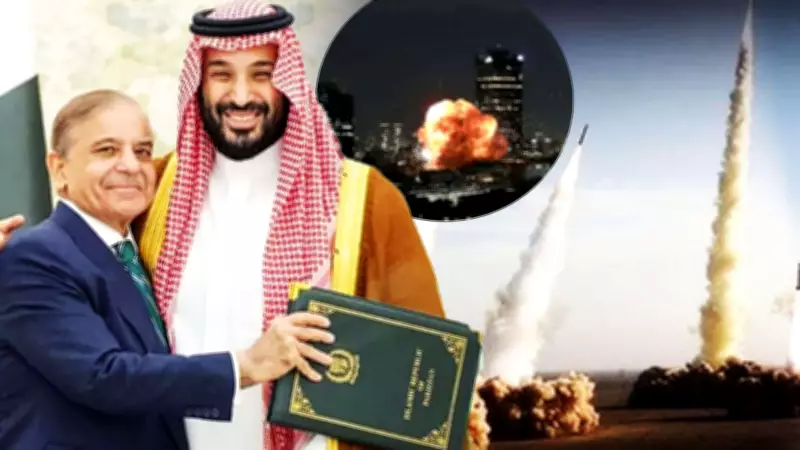
Just five months ago, Pakistan and Saudi Arabia signed the Strategic Mutual Defence Agreement, a pact with unambiguous language declaring that any attack on one nation would be considered an attack on both. This agreement was meant to solidify Pakistan's regional importance and create a powerful security partnership between the two Islamic nations.
On Saturday, that pact faced its first real-world test when Iran launched strikes against Saudi Arabia in retaliation for earlier attacks by the United States and Israel. The carefully negotiated agreement, designed to provide mutual protection, has instead created what analysts are calling Pakistan's most dangerous foreign policy dilemma in decades.

Pakistan's Impossible Choice
Pakistan now finds itself trapped between two equally catastrophic options. If Islamabad honors the defense pact with Saudi Arabia, it would mean entering into direct conflict with Iran—a country with which Pakistan shares a long, volatile border stretching approximately 900 kilometers.
Such a confrontation could have devastating consequences:
- Military escalation along the Iran-Pakistan border
- Potential Iranian retaliation that could target Pakistan's infrastructure
- Ignition of sectarian fault lines within Pakistan itself
- Disruption of regional stability across South Asia and the Middle East
Conversely, if Pakistan abandons its defense commitment to Saudi Arabia, it risks losing its most important economic partner. Saudi Arabia provides Pakistan with billions of dollars in remittances from Pakistani workers, crucial loans during economic crises, and vital oil credit that keeps Pakistan's fragile economy functioning.
Economic Dependence Meets Security Imperative
The economic relationship between Pakistan and Saudi Arabia has become increasingly vital for Islamabad's survival. Saudi Arabia hosts approximately 2.5 million Pakistani workers whose remittances constitute a significant portion of Pakistan's foreign exchange reserves. Additionally, Saudi financial assistance has repeatedly bailed out Pakistan during economic crises, including recent loan packages worth billions of dollars.
Pakistan's energy security also depends heavily on Saudi cooperation, with Riyadh providing deferred payment facilities for oil imports that Pakistan could not otherwise afford at current market prices. This economic lifeline stands in stark contrast to the security threat posed by antagonizing Iran, creating what analysts describe as Pakistan's most severe foreign policy crisis in recent memory.
Field Marshal Asim Munir's Regional Vision Backfires
The current predicament exposes the limitations of Field Marshal Asim Munir's regional strategy, which sought to position Pakistan as an indispensable partner to multiple Middle Eastern powers simultaneously. What was intended as diplomatic balancing has instead become what military analysts are calling a "double-edged sword" that has left Islamabad with minimal room for diplomatic maneuvering.
Rather than making Pakistan indispensable to regional security arrangements, the defense pact with Saudi Arabia has created an inescapable dilemma that forces Islamabad to choose between economic survival and military security. The situation highlights the inherent risks of Pakistan's attempt to maintain strategic partnerships with competing regional powers who are now in direct conflict.
Regional Implications and Future Scenarios
The Iran-Saudi conflict and Pakistan's resulting dilemma have significant implications for regional stability. Pakistan's decision—or indecision—could influence broader Middle Eastern dynamics and potentially draw other regional players into the conflict. The situation also tests the limits of bilateral defense agreements in an increasingly multipolar world where traditional alliances are being constantly renegotiated.

As diplomatic efforts intensify behind the scenes, Pakistan faces mounting pressure from both sides. Saudi Arabia expects its treaty partner to honor their mutual defense commitment, while Iran warns of severe consequences if Pakistan joins what Tehran characterizes as "foreign aggression" against Iranian interests.
The coming days will reveal whether Pakistan can navigate this crisis through diplomatic channels or whether Islamabad will be forced to make the impossible choice between honoring its alliance with Saudi Arabia and avoiding catastrophic conflict with Iran.