Iranian Man's Desperate Suicide Video Plea to Trump: 'Stop Any Deal with Tehran Regime'
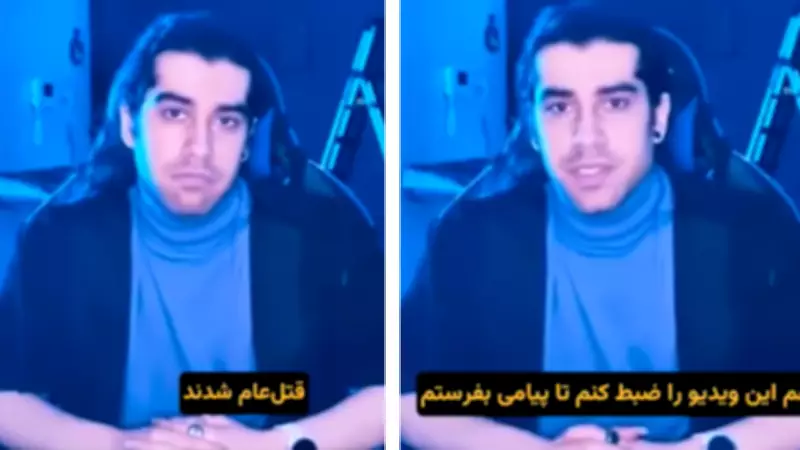
In a tragic and desperate act, an Iranian man who recorded a video appeal directly to US President Donald Trump has taken his own life after urging the American leader not to strike any agreement with Iran's current ruling establishment. Iranian media outlets and activists have identified the man as Pouria Hamidi, a resident from the southern port city of Bushehr.
A Final Message in English: 'If You're Watching This, I'm Not Around'
In a video lasting approximately 10 minutes and recorded entirely in English, Hamidi stated his primary goal was to bring international attention to what he described as a violent and brutal crackdown on protests within Iran. The video opens with the haunting line: "If you're watching this, then I'm not around anymore." He explicitly claimed the recording was intended to make the global community realize the scale of the massacre carried out by Iranian authorities during recent periods of civil unrest.
Hamidi made a shocking and unverified claim, stating: "More than 40,000 people died, killed, massacred. More than Russia and Ukraine war and more than Israel and Palestine." These figures were presented without providing concrete evidence, as reported by the outlet Iran Insight. His message was a direct and emotional indictment of the regime's actions.

Direct Appeal to US Leadership: 'Do Not Betray the Dead'
Addressing American leaders directly, Hamidi issued a stark warning against entering into any negotiations with Tehran. He argued that any such agreement would fundamentally "betray all those people who died." His plea was impassioned: "So please, I beg you, do whatever you can to stop this deal."
Expressing a profound sense of hopelessness with diplomatic channels, Hamidi called explicitly for foreign military intervention. "America attacking Iran is the only hope we have right now," he asserted, adding, "We can't fight this regime alone. Our people need foreign intervention." His video also contained pointed criticism of Iran's religious leadership and included expressions of support for the exiled Prince Reza Pahlavi.
A Switch to Persian and a Plea for Unity
Hamidi framed his final message as an attempt to give his own life meaning and urged his fellow Iranians to stand together. At the conclusion of the recording, he switched to his native Persian language, delivering a poignant farewell: "We people of Iran are lonely people and have nobody, so please support each other. Long live Iran."
Heightened Geopolitical Tensions Surrounding Iran Deals
This tragic incident occurs against a backdrop of significantly heightened international tensions concerning Iran and the looming possibility of renewed diplomatic negotiations with Tehran. Israel, in particular, has voiced severe and consistent concerns over any potential deal that would effectively preserve Iran's current ruling system.
According to a detailed report by Israel Hayom, Israeli officials harbor deep fears that an agreement could achieve several undesirable outcomes:
- It would leave the ayatollah's regime firmly in power.
- It would unlock billions of dollars in currently frozen Iranian funds.
- It would fail to adequately dismantle Iran's advancing nuclear and ballistic missile programs.
The report further indicated that Israel remains on high alert, with some officials viewing such a diplomatic deal as potentially more dangerous than an outright military confrontation. In response, Israeli officials are expected to significantly ramp up their diplomatic and intelligence efforts. Their goal is to persuade President Trump that there exists a "historic window of opportunity" to decisively curb the threat posed by Iran.
These intensified efforts are also anticipated to critically shape the agenda for Israeli Prime Minister Benjamin Netanyahu's planned high-stakes meeting with President Trump in Washington later this week, adding another layer of complexity to an already volatile international situation.