Budget 2026-27 Exposes Government Apathy Towards Judiciary With Mere 0.08% Allocation
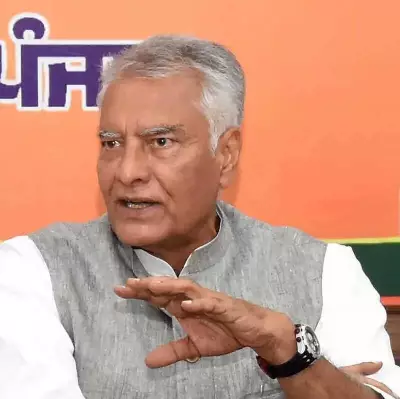
Advocate Asim Sarode has sharply criticized the Union Budget 2026-27 for its minimal allocation to the judiciary, which stands at a paltry 0.08% of the total budget. Speaking at a press conference in Pune on Tuesday, Sarode highlighted that this meager allocation amounts to just Rs 4,509.06 crore, a figure he argues is grossly inadequate given the staggering backlog of approximately 5 crore pending cases across Indian courts.
Systemic Issues Behind Massive Case Pendency
Sarode emphasized that the problem of pendency is not solely due to insufficient courts but is compounded by critical shortages in court staff and courtroom availability. He pointed out that about 4 crore of these pending cases are stuck in lower courts alone, creating a major obstacle to economic investment and growth. This fact has been consistently ignored by policymakers, according to Sarode, who noted that 45% of the pendency is concentrated in five states: Uttar Pradesh, Maharashtra, West Bengal, Bihar, and Gujarat.
Inadequate Funding for Judicial Infrastructure and Digital Initiatives
The advocate flagged several areas where budgetary neglect is hampering judicial efficiency:

- E-Court Project: Sarode noted that only Rs 7,000 crore has been allocated till the last budget for maximizing the e-court project, which is insufficient to address digital infrastructure gaps.
- Low Digital Infrastructure: He highlighted how inadequate online hearing facilities at district and taluka levels are further slowing down the judicial process.
- Gram Nyayalaya System: Sarode called for reviving this grassroots justice system, which has become almost non-functional due to a mere Rs 50 crore allocation by the Centre and lack of state government seriousness.
Broader Implications of Underfunding the Judiciary
Sarode argued that vitalizing the judicial system does not appear to be on the government’s priority list, despite global recognition of an efficient judiciary’s role in facilitating economic growth. He revealed that the total public spending on the judiciary is less than 0.4% of the combined gross budgetary expenditure of state and central governments, with state governments shouldering 90-92% of the financial responsibility. The effects of this underfunding are visibly detrimental to court performance, he stated.
Recommendations for Strengthening the Judicial Framework
To address these issues, Sarode proposed several measures:
- Establish research offices with experts in law, policy, and technology at the Supreme Court and High Courts, as judges are experts primarily in law.
- Implement monitoring systems for budgetary expenditure to prevent funds from being spent on non-essential protocol management and programs.
- Increase allocations for special courts dealing with sensitive cases like rape and POCSO, which have consistently received only Rs 200 crore.
Sarode’s critique underscores a pressing need for the government to reassess its budgetary priorities to ensure that the judiciary can function effectively and reduce the massive backlog of cases that is stifling both justice and economic progress.