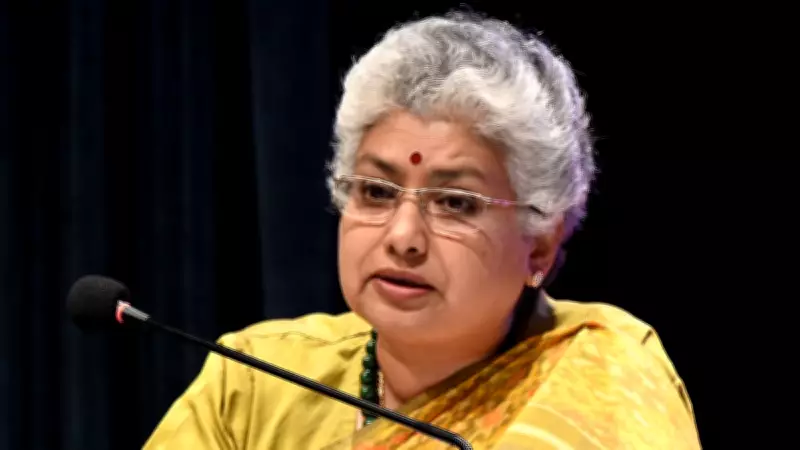
Justice Nagarathna: Challenges to Free Press Cannot Be Tolerated
In a significant statement addressing the state of media in India, Supreme Court Justice B V Nagarathna has declared that any challenge to a free and independent press cannot be countenanced. Her remarks underscore the vital role journalism plays in a democratic society, particularly in safeguarding public interest against external influences.
Reader-Supported Press as a Pillar of Democracy
Justice Nagarathna emphasized that a press sustained by its readers is inherently better positioned to serve the public good. "A media funded and supported by the public is more resilient and accountable," she noted, highlighting how such a model helps fend off political pressures and commercial interests that might otherwise compromise journalistic integrity.
This perspective comes at a time when media organizations globally, including in India, face increasing scrutiny over their funding sources and editorial independence. The Justice's comments serve as a reminder of the foundational principles of press freedom enshrined in democratic values.

The Broader Context of Press Freedom in India
India's media landscape has witnessed numerous debates and controversies regarding freedom of expression and the role of journalism. Key points include:
- Legal Protections: The Indian Constitution guarantees freedom of speech and expression, but recent years have seen legal challenges and regulatory pressures on media outlets.
- Political Interference: Instances of alleged political influence over news coverage have raised concerns about the autonomy of the press.
- Economic Pressures: With changing revenue models, many media houses struggle to maintain independence while ensuring financial sustainability.
Justice Nagarathna's advocacy for a reader-supported model suggests a potential pathway to mitigate these issues, fostering a more robust and unbiased media ecosystem.
Implications for Journalism and Public Discourse
The Justice's statements are not merely theoretical but carry practical implications for how journalism is practiced and consumed in India. By championing a press that prioritizes public interest over partisan agendas, she calls for:
- Greater transparency in media funding and operations.
- Enhanced public engagement and support for independent journalism.
- Strengthened legal frameworks to protect journalists from undue pressures.
As the media continues to evolve with technological advancements and shifting societal norms, such principles are crucial for maintaining trust and credibility in news reporting.
In conclusion, Justice Nagarathna's firm stance against threats to press freedom highlights an ongoing struggle for journalistic independence in India. Her emphasis on reader support as a bulwark against political pressures offers a vision for a more resilient and democratic media future, urging all stakeholders to uphold the sanctity of a free press.