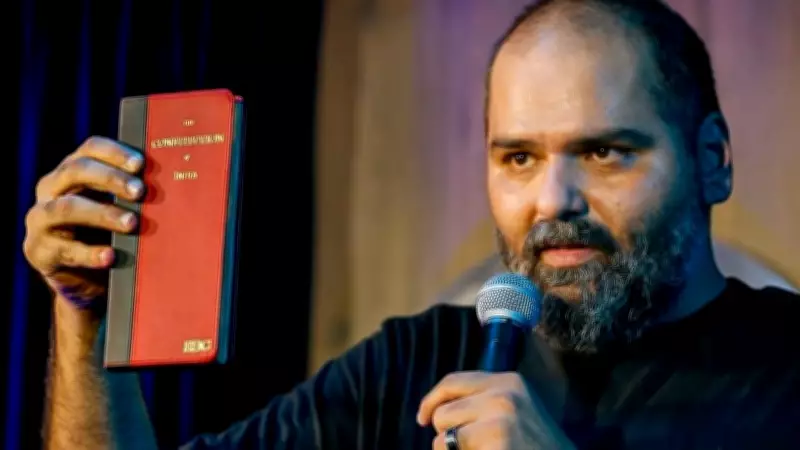
Kunal Kamra and Advocate Challenge IT Rules and Sahyog Portal in Bombay High Court
Stand-up comedian Kunal Kamra, alongside Senior Advocate Haresh Jagtiani, has filed writ petitions in the Bombay High Court, seeking to strike down the Sahyog Portal and amendments to the Information Technology (IT) Rules. The court is expected to hear these significant pleas on March 16, 2026, in a case that raises critical questions about digital rights and governance.
Petitioners Allege Unconstitutional Restrictions on Free Speech
The petitions, filed on February 4, 2026, argue that the Sahyog Portal, established to expedite orders for blocking objectionable content on social media, and the amended Rule 3(1)(d) of the IT Rules, 2021, impose unconstitutional and unreasonable restrictions on freedom of speech. According to the petitioners, these measures allow thousands of government officers at central and state levels to issue takedown orders without following the proper legal procedures mandated under the IT Act.
In his plea, Kamra stated, "Such powers amount to an unconstitutional and unreasonable restriction on the freedom of speech that goes beyond the constitutionally permissible grounds enumerated under Article 19(2) of the Constitution." The petitions further claim that these actions violate fundamental rights under Articles 19(1)(a), 19(1)(g), and Article 14, and are beyond the scope of the IT Act, 2000.
Details of the Legal Challenge
The pleas, filed through Advocate Meenaz Kakalia, highlight several key concerns:
- The Sahyog Portal enables unilateral blocking or takedown of internet content without issuing notice to content originators, providing hearings, or passing reasoned orders.
- Amended IT Rule 3(1)(d) and the Portal render all online information vulnerable to arbitrary removals, with no effective remedies against such actions.
- These measures strike at the heart of democracy by undermining citizens' right to information and giving unchecked power to government officials over internet content flow.
The petitioners have requested the court to declare that blocking orders can only be issued under Section 69A of the IT Act, read with the Blocking Rules of 2009. They also seek directions to quash the October 31, 2023, Office Memorandum that created the Sahyog Portal and to suspend its operations pending the final disposal of the case.
Government's Stance and Previous Legal Context
The government has defended the amendments to Rule 3(1)(d), which took effect on November 15, 2025, stating they introduce additional safeguards to ensure transparent, proportionate, and accountable removal of unlawful content by intermediaries. However, the petitioners counter that these changes lack sufficient oversight and due process.
This case follows a previous legal victory for Kamra in September 2024, when the Bombay High Court, with a 2:1 majority, struck down amended IT Rules that allowed the establishment of a Fact Check Unit to identify fake news on social media. That decision, influenced by a third judge's opinion, sets a precedent for judicial scrutiny of government overreach in digital regulation.
The upcoming hearing on March 16 is poised to be a landmark event, potentially shaping the future of internet freedom and regulatory frameworks in India. As digital platforms become increasingly central to public discourse, the outcome of this case could have far-reaching implications for free speech, privacy, and democratic accountability in the digital age.