

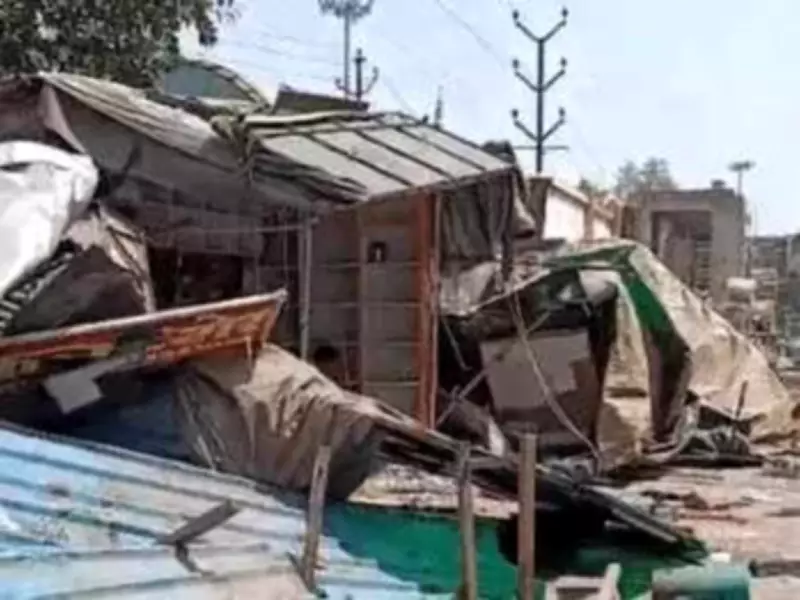
Kanpur: PWD Demolishes 10 Medical Stores and Hotel Near Cardiology Hospital
In a significant enforcement action, the National Highway division of the Public Works Department (PWD) carried out a demolition drive in Kanpur's Rawatpur area on Sunday. The operation targeted approximately 10 medical stores and a hotel located near a cardiology hospital, citing severe encroachment issues that were impeding traffic flow and emergency access.
Demolition Drive Executed Amid Protests
Early in the morning, officials from the district administration and National Highways arrived at the cardiology hospital with JCB machines and a dedicated team. As news of the impending demolition spread, office-bearers of the Retail Medicine Vyapar Mandal and other stakeholders quickly assembled to argue with the authorities. Despite their vigorous protests and attempts to halt the proceedings, the officials proceeded with the bulldozing of the shops.
One medical store was spared from demolition due to a court stay order obtained by its owner. However, all other establishments, including a hotel that had been constructed on the footpath, were completely razed. Prior to the demolition, officials showed consideration by allowing shop owners to safely remove their stock and other valuable articles from the premises.

Official Justification and Traffic Concerns
Authorities explained that the demolition was necessary because the encroaching shops were causing frequent traffic jams. This congestion critically delayed ambulances and other vehicles from reaching the cardiology hospital in a timely manner, posing a serious risk to patient care and emergency response. There is widespread speculation that this action by the PWD's NH division is linked to broader plans for road widening in the area to improve infrastructure and traffic management.
Shop Owners' Claims and Historical Context
In response, Praveen Bajpai, the General Secretary of the Retail Medicine Vendor Association, contested the officials' claims. He asserted that these shops had been operating at the location for nearly four decades and were not responsible for any road jams or public harm. Bajpai alleged that the demolition was instigated solely based on a complaint filed by the cardiology hospital, emphasizing that the shops were situated on PWD land, which he argued should have afforded them some protection or consideration.
This incident highlights ongoing tensions between urban development initiatives and long-standing local businesses, raising questions about the balance between public safety, infrastructure needs, and the livelihoods of small shop owners.






