Karnataka Police Chief Issues Directive to Halt 'Mechanical' FIRs in Social Media Cases
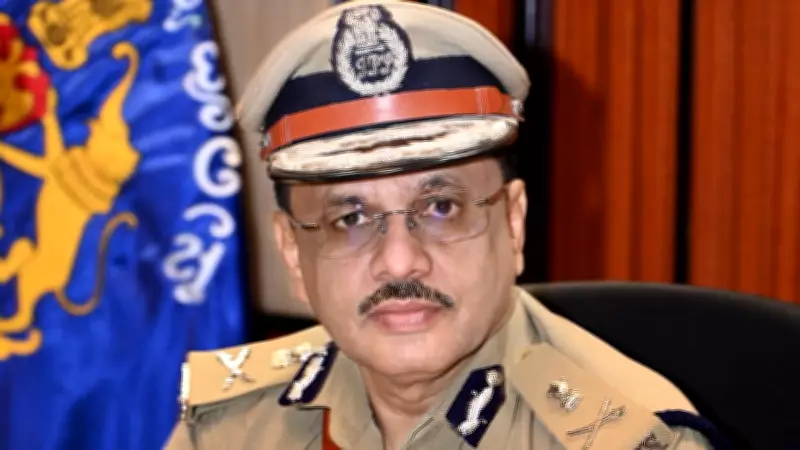
In a significant move to curb the automatic registration of First Information Reports (FIRs) for social media content, Karnataka's Director General and Inspector General of Police (DG&IGP) M A Saleem has issued a stern warning to police officials across the state. The circular, dated February 7, 2026, emphasizes the need for preliminary inquiries and adherence to Supreme Court guidelines before lodging cases related to online posts.
Supreme Court Guidelines Mandate Preliminary Enquiries
DG&IGP Saleem highlighted that police officers have been registering cases involving social media posts in a mechanical manner, without conducting the required preliminary enquiries. This practice violates the directives established by the Supreme Court of India in the landmark case of Imran Pratapgadhi vs State of Gujarat, Criminal Appeal No. 1545/2025, dated March 28, 2025. The circular references this judgment, which upheld guidelines framed by the Telangana High Court for FIR registration in social media-related matters.
Key instructions include:

- Police must verify if the complainant qualifies as the 'person aggrieved' under the law before registering an FIR for alleged defamation or similar offences.
- Complaints from unrelated third parties lacking legal standing are not maintainable, except in cases involving cognizable offences.
- A preliminary inquiry must be conducted to determine if the statutory ingredients of the alleged offence are prima facie established.
Protections for Free Speech and Political Criticism
The circular explicitly safeguards constitutional protections for free speech, particularly under Article 19(1)(a) of the Constitution. It states that no cases alleging promotion of enmity, intentional insult, public mischief, threat to public order, or sedition should be registered unless there is prima facie evidence of incitement to violence, hatred, or public disorder.
"Police shall not mechanically register cases concerning harsh, offensive, or critical political speech. Criminal law may only be invoked when the speech amounts to incitement to violence or poses an imminent threat to public order," the directive emphasizes.
Strict Procedures for Defamation and Arrests
Since defamation is classified as a non-cognizable offence, the circular clarifies that police cannot directly register an FIR in such matters. Complainants must be directed to approach the jurisdictional magistrate, with police action permitted only upon a specific court order.
Additionally, the circular reinforces arrest guidelines, citing the Supreme Court ruling in Arnesh Kumar vs State of Bihar. It prohibits automatic or mechanical arrests and stresses the principle of proportionality in criminal processes.
Further measures include:
- In cases involving political speech or sensitive expression, police must obtain prior legal opinion from the public prosecutor to ensure legal sustainability.
- If a complaint is found to be frivolous, vexatious, or politically motivated, it should be closed under Section 176(1) of the Bharatiya Nagarik Suraksha Sanhita (BNSS), citing insufficient grounds for investigation.
This circular follows an earlier directive issued on July 4 last year, underscoring the police department's commitment to aligning with judicial standards and protecting citizens' rights in the digital age.