

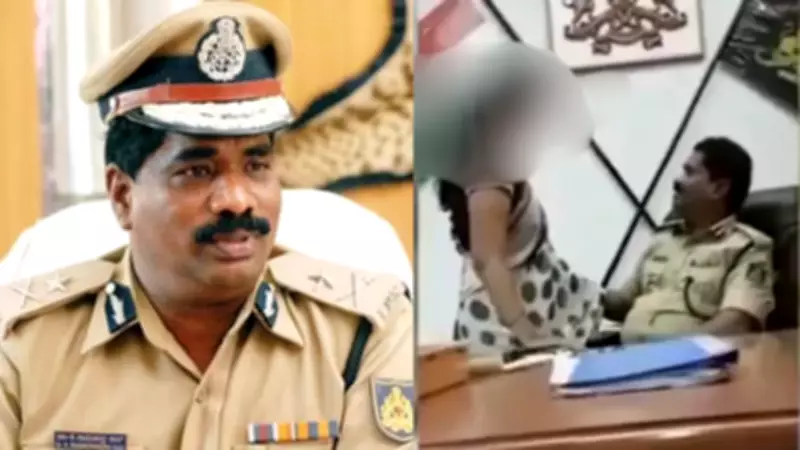
Karnataka DGP Sleaze Videos Authentic, Not AI-Generated: Probe Panel
A special investigation committee in Karnataka has delivered a significant ruling in the high-profile case involving suspended Director General of Police (DGP) Ramachandra Rao. The panel has categorically dismissed claims that controversial sleaze videos purportedly featuring Rao were artificially generated or edited using advanced technology.
Forensic Analysis Confirms Video Authenticity
The committee, comprising senior IPS officials, submitted a comprehensive 100-page report to the state government. This document includes crucial forensic evidence from the Forensic Sciences Laboratory (FSL), which conclusively determined that the video clips had not been subjected to any tampering or digital manipulation. The forensic examination confirmed the videos are neither deepfakes nor edited versions, directly contradicting Rao's earlier assertions that the footage was fabricated.
Departmental Inquiry Initiated Against Suspended DGP
Following the committee's findings, the Department of Personnel and Administrative Reforms issued an official notice to Ramachandra Rao on Wednesday. This procedural step formally initiates a departmental inquiry against the senior police officer. The videos in question depict an officer in police uniform engaging in indecent physical acts with two women, sparking widespread controversy and political ramifications.

Historical Context and Investigation Details
The controversial videos were reportedly recorded during the period of 2016-2017 inside the office of the Inspector General of Police for the Belagavi range. Media scrutiny intensified as Ramachandra Rao had previously served in that exact position, though he consistently denied the allegations, maintaining the videos were malicious fabrications.
As the situation threatened to escalate into a major political controversy, Chief Minister Siddaramaiah took decisive action by suspending Rao from his duties. The chief minister simultaneously ordered a thorough investigation and established a special committee to examine the matter impartially.
Committee Composition and Investigative Methodology
The investigation committee was headed by Additional Director General of Police R Hitendra, with senior officers Chetan Singh Rathore, Rishyanth CB, and Kala Krishnaswamy serving as members. The team conducted an exhaustive investigation, recording detailed statements from multiple individuals who had professional associations with Rao during his tenure as IGP-Belagavi.
"The investigative team recorded statements from orderlies, drivers, staff members, and other junior officers who had worked closely with Rao during his assignment as IGP-Belagavi," revealed sources familiar with the investigation. "These individuals uniformly identified the two women appearing in the video clips and confirmed that both women made repeated visits to Rao's official chamber during that period."
Key Witnesses and Evidentiary Challenges
Investigators noted that both women featured in the videos have since become incommunicado, presenting a challenge to the ongoing inquiry. However, authorities emphasize that their appearance before the committee to provide formal statements remains essential for the investigation's completeness.
Sources further disclosed that one of the women intentionally recorded a video using her mobile phone, indicating premeditation rather than accidental recording. This detail adds another layer to the complex investigation.
Background and Implications for Rao
Ramachandra Rao's professional conduct had previously come under scrutiny when his daughter, Ranya Rao, was apprehended for attempting to smuggle gold from Dubai. The current investigation unfolds as Rao approaches his scheduled retirement date of May 31. Official sources indicate that if the departmental inquiry remains ongoing beyond his retirement date, his post-retirement benefits will be temporarily withheld pending the investigation's conclusion.

The committee's findings represent a significant development in a case that has captured public attention and raised important questions about accountability within law enforcement agencies. The confirmation of video authenticity shifts the focus squarely toward the disciplinary proceedings and their potential outcomes.





