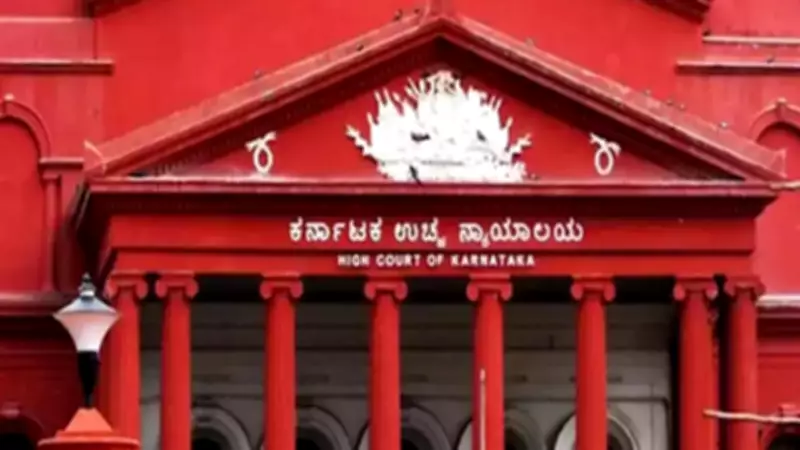
In a significant legal development, the Karnataka High Court has delivered a crucial ruling that establishes clear limitations on fines that can be imposed in cheque bounce cases. The court has explicitly stated that trial courts cannot levy fines exceeding twice the amount of the dishonoured cheque, providing important guidance for judicial proceedings across the state.
Key Ruling on Fine Limitations
Justice V Srishananda made this important observation while partially allowing an appeal filed by Mahadevi, an agriculturist from Banahatti in Jamakhandi taluk of Bagalkot district. The ruling came in response to a case that has been winding through the judicial system for several years, highlighting the need for clearer parameters in cheque dishonour matters.
Background of the Case
The legal matter originated in November 2007 when Mahadevi purchased two trailers from Krishi Lakshmi Agro Industries in Hubballi for a total amount of Rs 3,80,000. As part of the transaction, Mahadevi issued a cheque for Rs 3.8 lakh to cover the cost of the two trailers. However, this cheque was subsequently dishonoured, leading the seller to register a cheque bounce case against her.

On May 8, 2017, the magistrate's court at Banahatti convicted Mahadevi and directed her to pay Rs 7.65 lakh. This amount included Rs 7.6 lakh as compensation to the seller and an additional Rs 5,000 for defraying expenses to the state government.
Appeal Process and High Court Intervention
Following the magistrate court's decision, Mahadevi appealed against the order, but her appeal was dismissed by the district court at Bagalkot. This dismissal forced her to approach the Karnataka High Court for further legal recourse. In her appeal to the higher court, Mahadevi claimed that the trailers had not been delivered to her as part of the original transaction.
After thoroughly examining the case records, Justice Srishananda noted that Mahadevi had failed to establish her claim with cogent evidence. The judge found insufficient proof to support her assertion about non-delivery of the trailers, which became a crucial factor in the final decision.
Court's Final Decision and Rationale
Justice Srishananda directed Mahadevi to pay Rs 7.6 lakh as compensation to the complainant, upholding this portion of the lower court's order. However, regarding the Rs 5,000 that was to be paid toward defraying expenses to the state government, the judge set aside this part of the order.
The court ruled that no state machinery was involved in the transaction between Mahadevi and Krishi Lakshmi Agro Industries, making the imposition of such expenses inappropriate. This aspect of the decision reinforces the principle that state-related expenses should only be levied when government resources or machinery have been genuinely utilized in the case proceedings.
Broader Implications of the Ruling
This landmark judgment establishes an important precedent for cheque bounce cases throughout Karnataka. By limiting fines to twice the dishonoured cheque amount, the High Court has provided much-needed clarity for trial courts handling similar matters. The decision helps prevent excessive penalties while ensuring that compensation remains proportionate to the original transaction value.
The ruling also emphasizes the importance of proper evidence presentation in legal proceedings, as demonstrated by the court's assessment of Mahadevi's claims. Legal experts suggest this decision will influence how cheque bounce cases are adjudicated in lower courts across the state, potentially affecting numerous pending and future cases.