

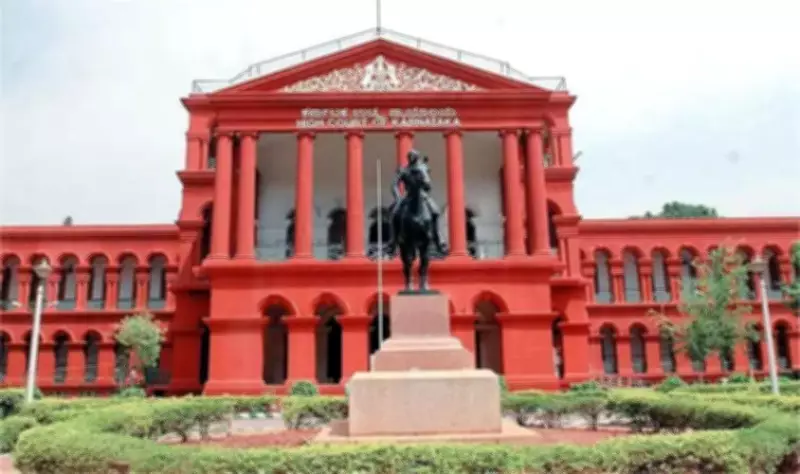
Karnataka High Court Clarifies Vehicle Owner Liability in Landmark Ruling
The Karnataka High Court has delivered a significant judgment clarifying that the legal liability for a vehicle remains firmly with its registered owner until the formal transfer of ownership is officially recorded in the Registration Certificate (RC). This ruling reinforces the critical importance of proper documentation in vehicle transactions.
Court Directs Payment of Rs 47 Lakh in Fatal Accident Case
A division bench comprising Justices SG Pandit and KV Aravind issued this observation while adjudicating a compensation appeal related to a tragic accident. The court directed Sunil Kumar, a resident of Marathahalli in Bengaluru, to pay the entire modified compensation amount of Rs 47 lakh to the family of Hanumantha, who lost his life after being struck by a motorcycle on June 18, 2020.
Disputed Ownership and Tribunal's Initial Verdict
The case involved a complex dispute over vehicle ownership. Sunil Kumar claimed he had sold the motorcycle involved in the accident to an individual named Shabrez. However, Shabrez denied any such transaction, creating a contentious legal situation. Initially, the Motor Accident Claims Tribunal, in its verdict on December 31, 2024, awarded Rs 33 lakh to the victim's family, holding both Kumar and Shabrez jointly liable for the payment.

Both Kumar and Shabrez subsequently challenged the tribunal's decision. Simultaneously, the family members of the deceased Hanumantha filed a separate appeal, presenting additional evidence including the income tax returns filed by the victim before his untimely death.
Court's Reasoning on Owner Liability
The division bench meticulously examined the case details and noted a crucial fact: the registration of the motorcycle in question still remained in the name of Sunil Kumar. Based on this documentation, the court determined that Kumar retained legal liability for the vehicle. The bench relied on established Supreme Court precedents to affirm that until the ownership transfer is formally reflected in the RC, the registered owner cannot escape responsibility.
The court emphasized: "The registration of the motorcycle still remains in the name of Kumar and hence he is liable to pay the compensation amount." This statement underscores the legal principle that proper documentation is paramount in establishing liability.
Rectifying Compensation Calculation Errors
The High Court bench identified significant errors in the tribunal's methodology for calculating compensation. The tribunal had taken the average of the deceased's annual income over three years, amounting to Rs 2.9 lakh, based on his income tax returns. The division bench found this approach flawed.
The bench articulated a clearer principle for compensation computation: "The last of the returns showing the highest income can be the basis, subject to there being a gradual increase and such return having been filed before the date of the accident. We emphasize that consistent income is the basis for the computation of compensation."
Specifically, the court noted that the income tax return nearest to the accident date was for the assessment year 2018–19. This return, filed on August 29, 2018, declared an income of Rs 3.5 lakh. After accounting for tax deductions, the net income stood at Rs 3.4 lakh. The bench concluded, "We find that Rs 3.4 lakh would be appropriate to be taken as the basis for computing the compensation."
Enhanced Compensation and Final Disposition
Applying this corrected calculation method, the division bench enhanced the compensation amount by Rs 14 lakh over the tribunal's award. The total compensation was thus increased to Rs 47 lakh. In its final disposition, the court partly allowed the appeals filed by Hanumantha's family and Shabrez, while dismissing the appeal filed by Sunil Kumar entirely.
This judgment serves as a crucial reminder to all vehicle owners about the legal necessity of promptly updating registration records following any sale or transfer. The court's decision ensures that victims' families receive fair compensation while upholding stringent standards for vehicle ownership documentation.






