Karnataka High Court Sides with 84-Year-Old Father in Landmark Property Dispute
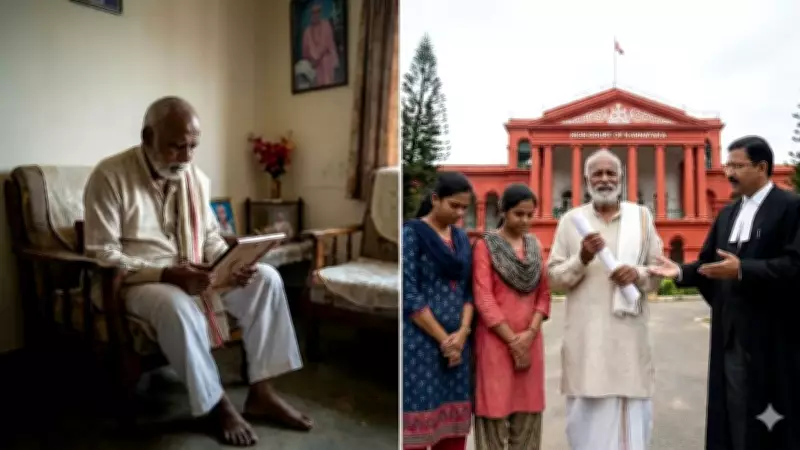
The Karnataka High Court has delivered a significant verdict, annulling a property gift deed executed by an 84-year-old man in favor of his two daughters, who allegedly neglected him after receiving the asset. Justice Suraj Govindaraj, in an order dated February 2, declared that the transfer was vitiated by constructive fraud, as the daughters failed to honor their assurance of providing care and maintenance to their father, Venkataiah.
Case Background and Legal Proceedings
Venkataiah, a resident of Tumakuru taluk, had gifted over 2 acres of his property to his daughters, Shivamma (now deceased) and Puttamma, in 2023. He approached the high court after authorities rejected his application under Section 23 of the Maintenance and Welfare of Parents and Senior Citizens Act, 2007, seeking to annul the deed and restore his name in revenue records. Venkataiah argued that the transfer was made on the express promise that his daughters would provide for his food, shelter, medical needs, and overall well-being in his old age.
Section 23(1) of the Act stipulates that if a senior citizen transfers property with the condition that the transferee provides basic amenities, and the transferee fails to do so, the transfer can be declared void due to fraud, coercion, or undue influence. Justice Govindaraj emphasized that the authorities erred in focusing on the absence of an explicit clause in the gift deed, noting that such formalities are often overlooked by trusting elderly parents.

Court's Emphasis on Trust and Social Reality
In its ruling, the court underscored that senior citizens frequently act on trust, familial assurances, and moral expectations rather than legal formalities when transferring property. Justice Govindaraj stated, "The law must account for the social reality that senior citizens act on trust, familial assurances, and moral expectations rather than on legal formalities." He added that insisting on explicit maintenance clauses in every gift deed would undermine the protective intent of the statute, particularly in rural areas where emotional and financial dependence on children is common.
The court also highlighted that the gift deed was prepared and drafted by the daughters, with Venkataiah being illiterate and unaware of its contents. This omission, which operated to his detriment, warranted heightened judicial scrutiny under welfare legislation designed to prevent exploitation of vulnerable individuals.
Rejection of Grandson's Claim and Corroborative Evidence
During the proceedings, Puttamma submitted a no-objection to declaring the gift deed void, which the court viewed as substantive corroboration of Venkataiah's claims of neglect. However, the petitioner's grandson, Narasegowda (son of the deceased daughter Shivamma), opposed the petition. The court dismissed his claim, stating that allowing him to assert an interest in the property without acknowledging the obligation to care for Venkataiah would confer an unfair legal advantage and defeat the purpose of Section 23.
Final Ruling and Implications
Setting aside the orders of the assistant and deputy commissioner, Justice Govindaraj annulled the gift deed as void and directed revenue authorities to restore Venkataiah's name as the absolute owner of the property in all records. The court warned that an indifferent approach to the vulnerability and trust of senior citizens renders statutory protections illusory. This ruling reinforces the judiciary's role in interpreting welfare laws flexibly to safeguard the rights of the elderly, emphasizing that constructive fraud can arise from breaches of implied trust in familial relationships.